Index
A small complaint count can feel reassuring. If only a few customers contacted support, the problem probably is not widespread.
But that conclusion includes only the people who decided to contact you.
This episode takes the second question from our original Coffee analysis: “Our customer service team only received a few complaints. Should we worry?” Instead of treating the support inbox as the full market signal, we followed negative food searches to see what people investigated before they ever contacted a company.
The answer did not appear in one clean complaint keyword. It appeared across health questions, translations, rankings, reviews, Reddit discussions, and evaluation content.
Where Hidden Customer Complaints Acutally Show Up
Query Finder surfaced 22,652 keywords across the selected negative terms, with 194,734 in total monthly search volume in the captured view. Those totals describe the filtered search landscape. They are not a count of dissatisfied customers.
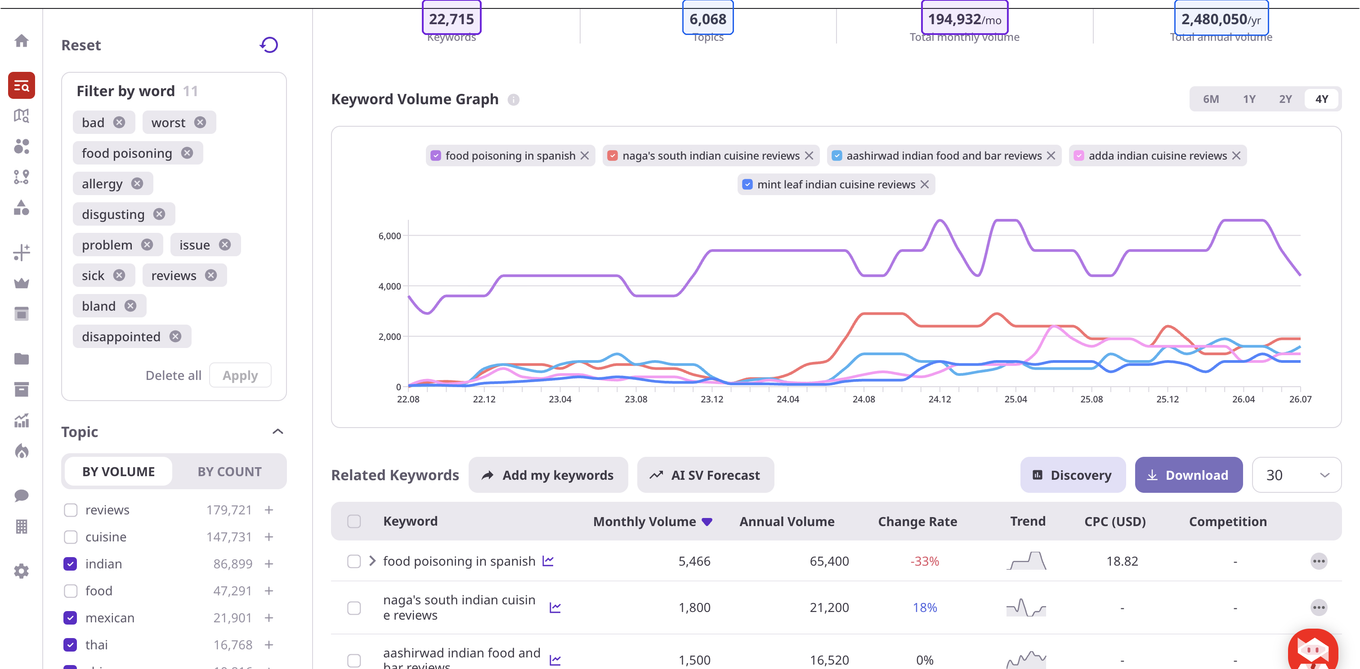
That distinction matters because the same words can represent very different needs. A poisoning query may reflect a health concern. A “bad for you” question may be nutritional research. A query asking how to say food poisoning in Spanish is a translation request. A restaurant or article title can also contain negative wording without expressing dissatisfaction.
Negative word match does not equal complaint intent.

The useful first step is therefore classification, not addition. Health and safety, taste and quality, service, value, translation, and editorial content should not be merged into one complaint total.
We Followed One Negative Query Instead of Counting Them All
We selected “worst American foods” and opened Path Finder. The surrounding path included “top 10 American food,” “top 15 most disgusting foods in America,” and “worst food in the world.”
This changed the interpretation. The seed did not behave like a direct report to a restaurant or brand. It sat inside a broader journey of ranking, comparison, and evaluation.
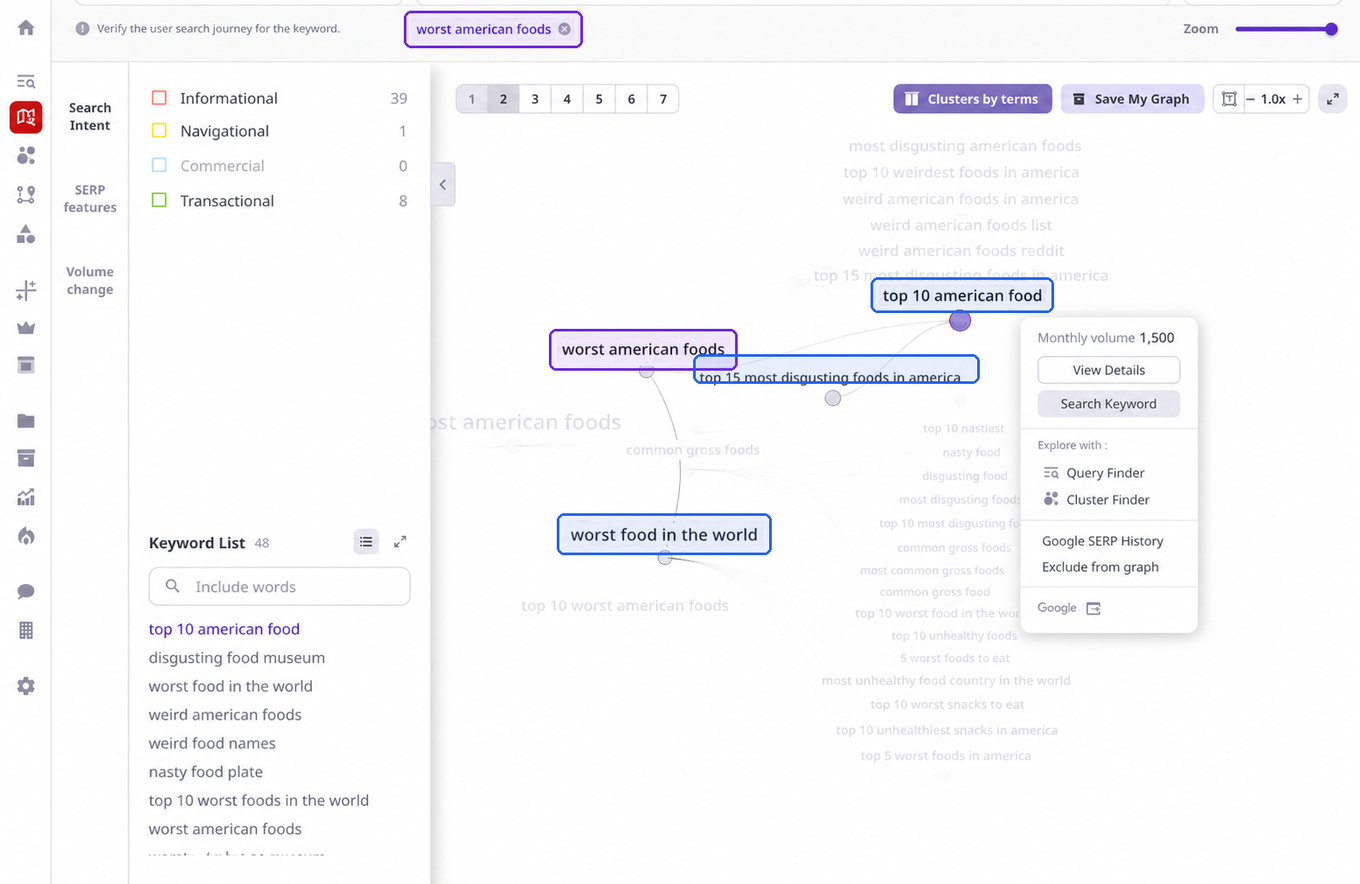
Key point: the negative phrase became more informative after we looked one step below it. The path shows adjacent searches, not proof that one person completed every step or purchased anything.
The Search Expanded Into Rankings, Reddit, and Review Publishers
We then followed “worst food in the world” through Road View. The visible branches included country comparisons, TasteAtlas searches, Reddit discussions, and lists of the world’s worst rated foods.
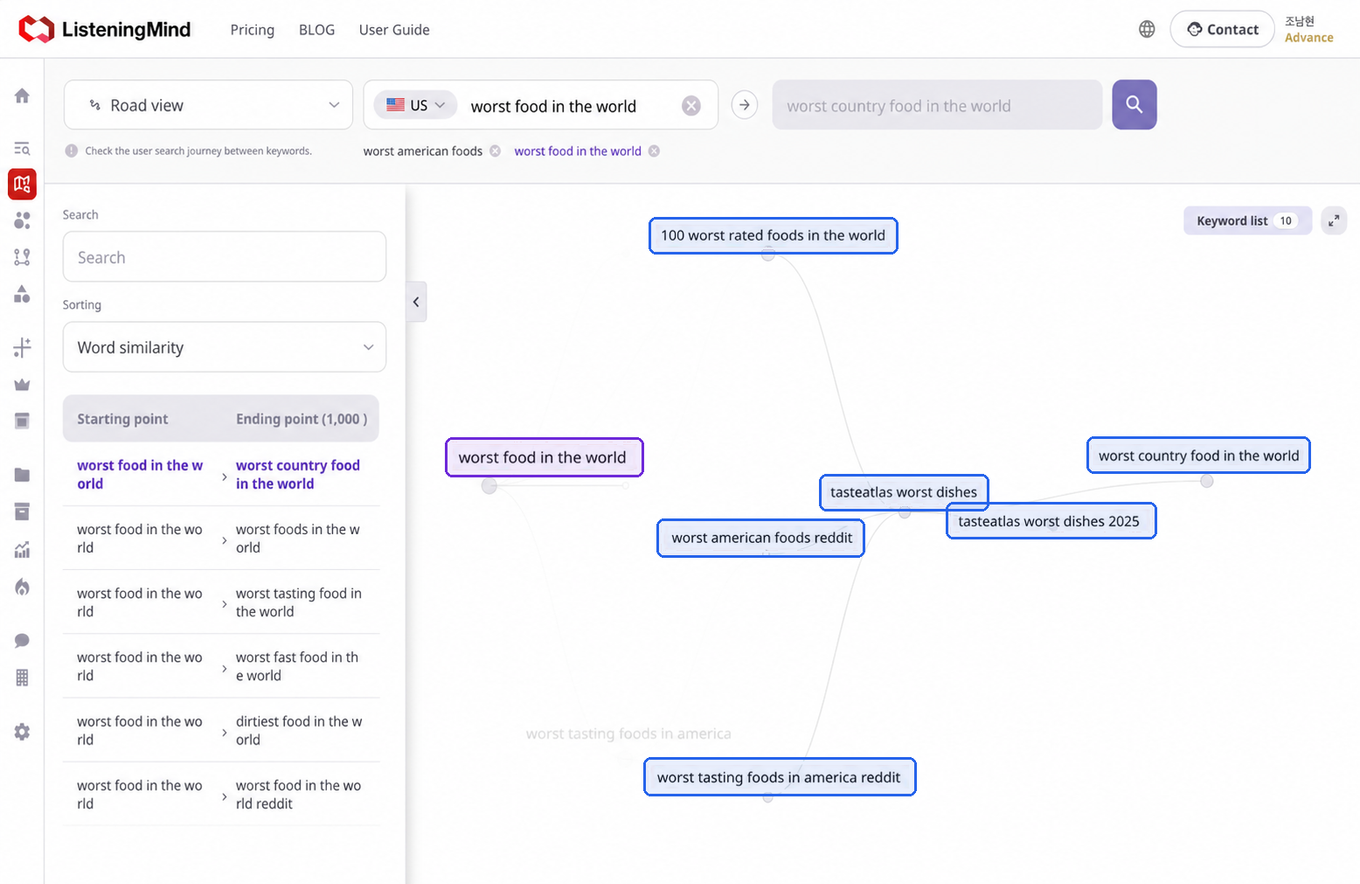
The behavior is evaluative rather than purely transactional. Searchers are looking for comparison points and other people’s judgments. This does not prove they agree with the content. It shows where negative perception can be researched and reinforced outside a customer service channel.
One Concern Became Several Adjacent Search Contexts
Cluster Finder widened the view again. The “worst food in the world” seed connected to unhealthy foods and risks, global food quality rankings, worst foods worldwide, country and cuisine comparisons, and food review contexts.
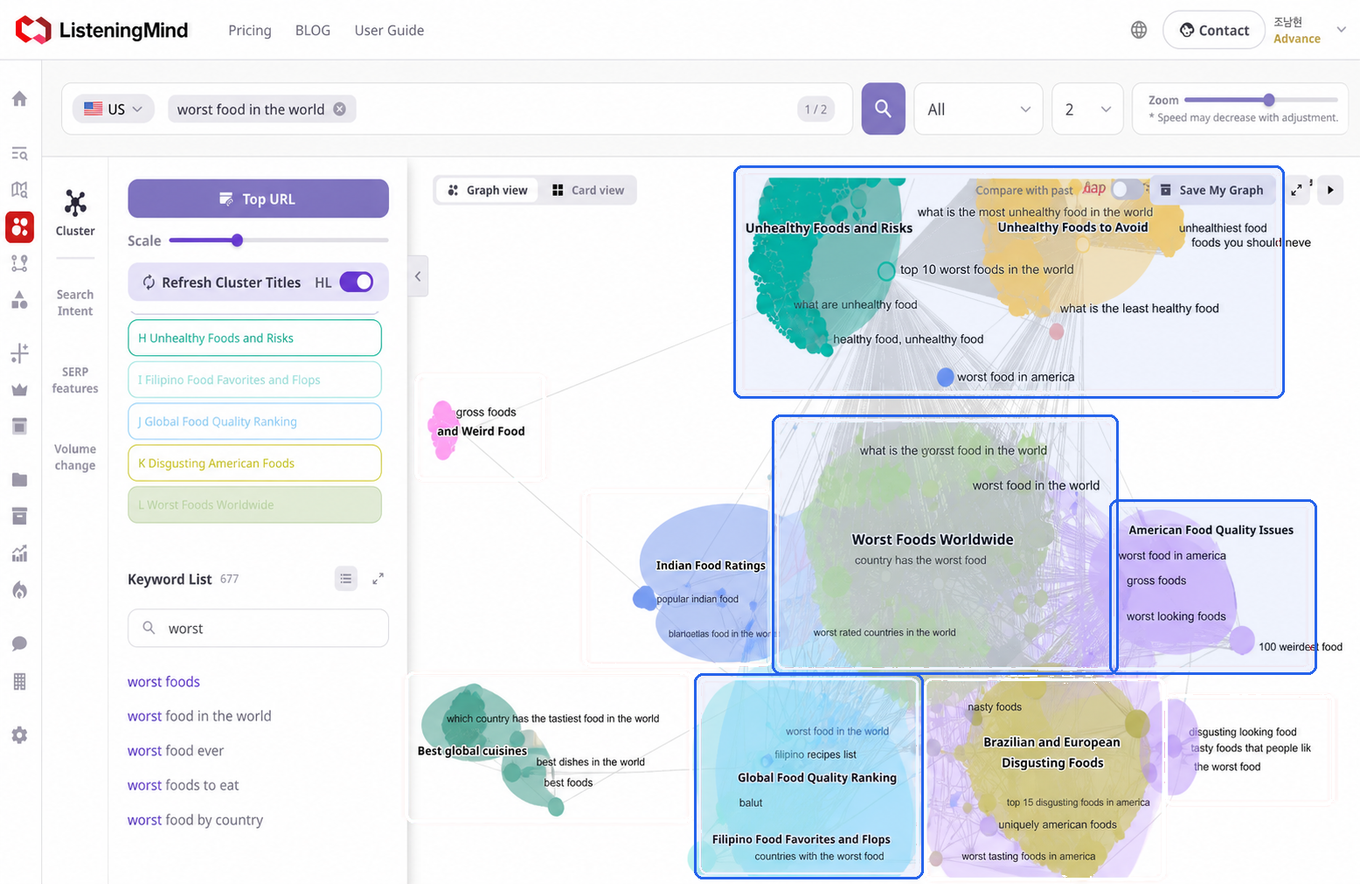
That structure is the signal. A complaint theme can be fragmented across many differently worded searches even when no single keyword is large. Repeated context matters more than one dramatic phrase.
When “popular Indian food” was selected inside the same environment, it appeared next to health concern, unhealthy food, global quality ranking, worst food, and review clusters. This is not evidence that opinion about Indian food is polarized. It shows that broad cuisine interest can sit next to evaluation and health research in the same search landscape.
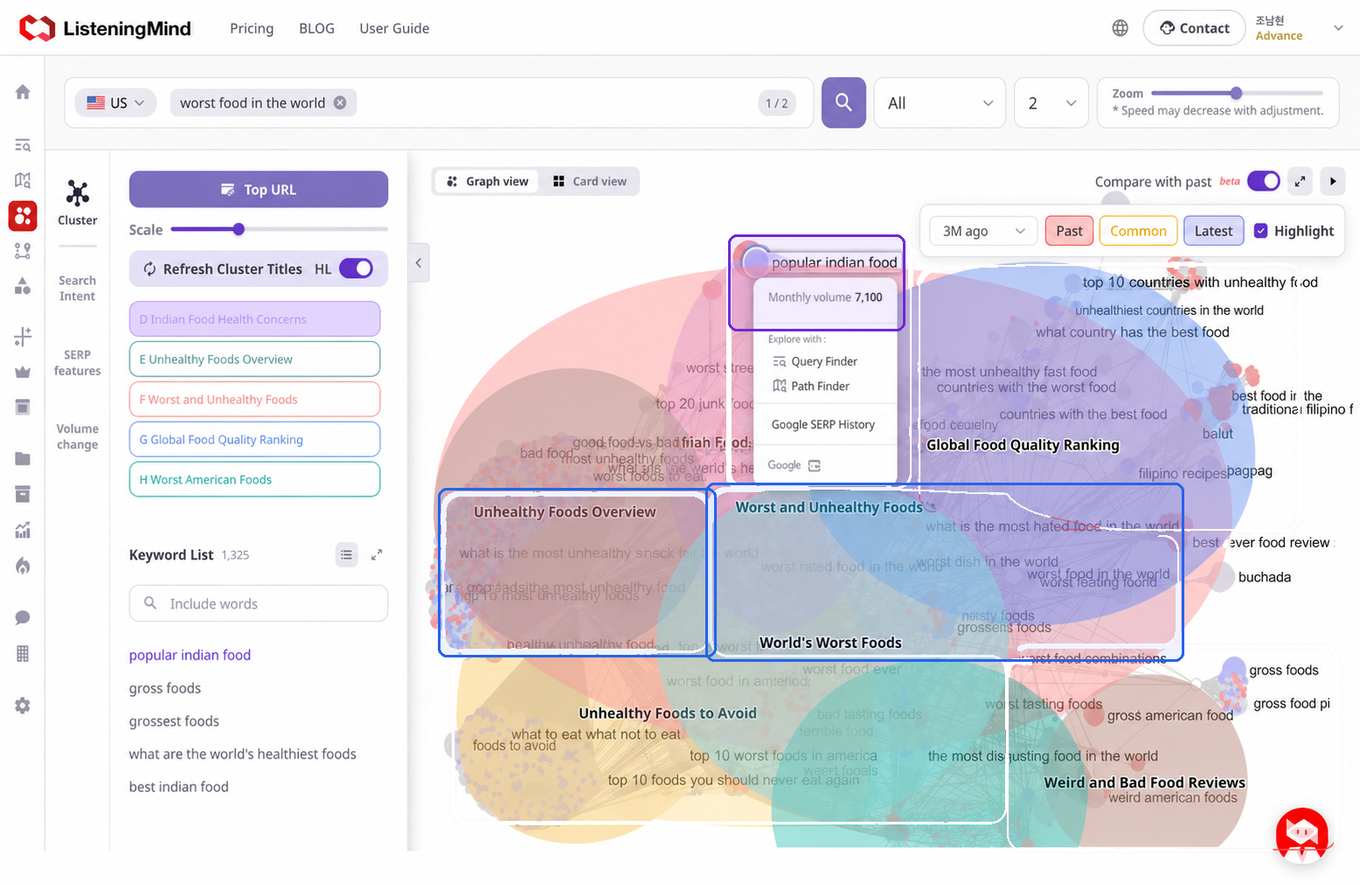
The result gives a marketer a place to investigate. It does not supply an automatic verdict about the cuisine, a brand, or the cause of the concern.
What Should a Marketer Do With This Signal?
- Separate concern types. Classify health, taste, service, value, translation, and editorial searches before drawing conclusions.
- Remove obvious false positives. Exclude names and content titles that contain negative words without expressing a consumer problem.
- Follow the path. Check whether a negative query leads toward symptoms, reviews, rankings, communities, restaurants, or brands.
- Look for repeated contexts. Use clusters to see whether different phrasings repeatedly point toward the same concern.
- Compare search with operational data. Customer service measures direct reports. Search can reveal investigation that never becomes a ticket.
The Takeaway
A few support tickets do not prove that a concern is small. They prove that only a few people contacted support.
In this food data analysis episdoe, negative language expanded into ranking sites, Reddit discussions, review content, food quality comparisons, and health related contexts. The signal was fragmented, but it was visible.
Not every concern becomes a complaint. Some become a search.
ListeningMind helps teams move beyond the first negative word and examine the search context forming underneath it. A small complaint count can feel reassuring. If only a few customers contacted support, the problem probably is not widespread.

Hi, I’m Nam Hyun Cho, part of the Growth team at ListeningMind.
If this content made you curious about what your own category looks like, let’s just look at it together — 15 minutes, your data, no slides.