Index
We get a version of the same handful of questions from marketing and insights teams, almost regardless of category. This time we picked one category, coffee: beans, capsules, and machines. We ran US data through ListeningMind and answered six of them with what we found. Swap in your own category at the end; the questions probably still apply.
Q1: Our biggest keyword just dropped 30%. Is the whole category dying?
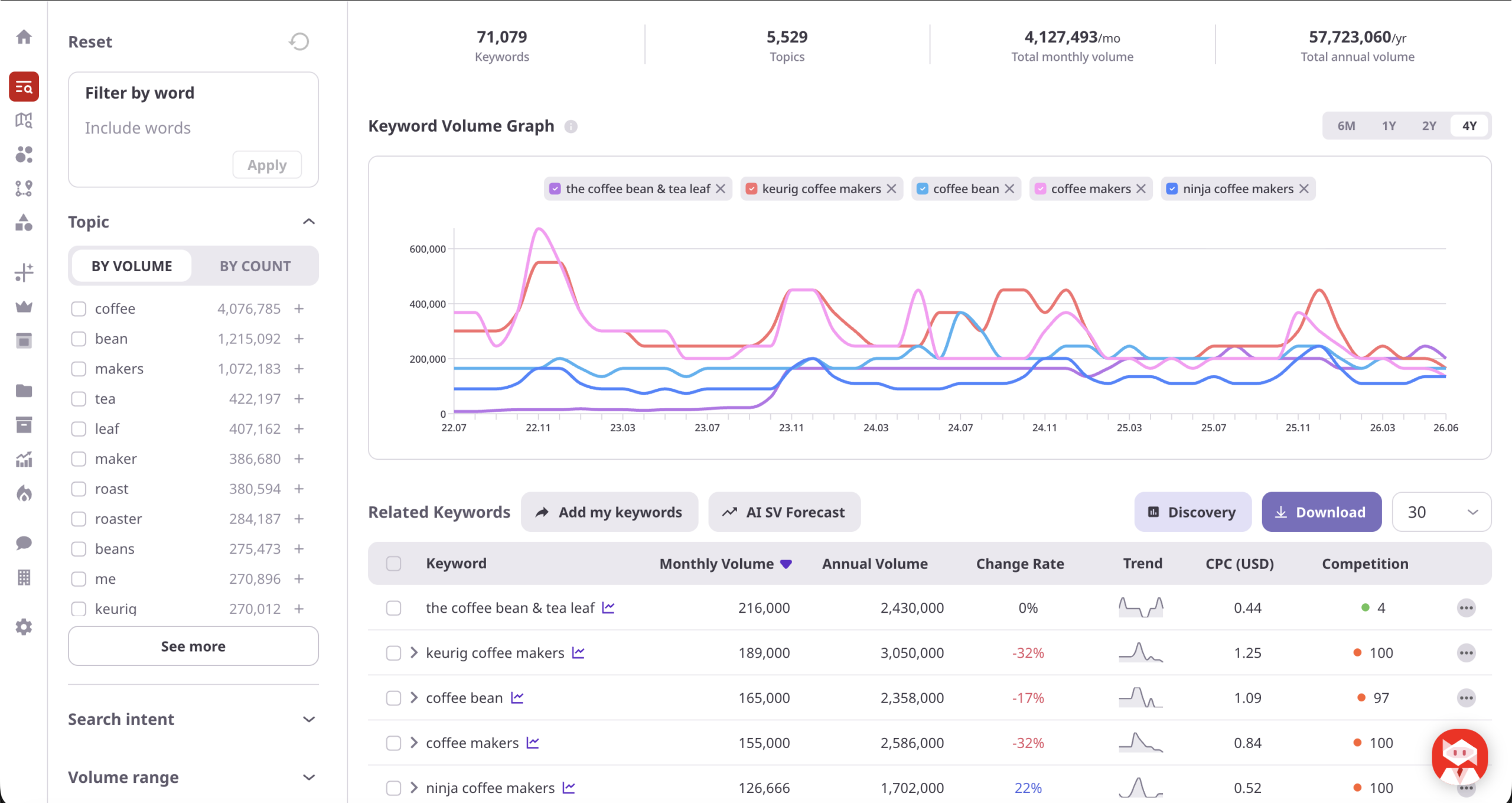
Not evenly, no. Over the last two years, “coffee makers” and “keurig coffee makers” both fell 32%. In the same window, “ninja coffee makers” rose 22%.
A shrinking head term can hide a real shift in who’s winning underneath it. The total tells you less than a brand-by-brand breakdown does. Before you read a falling number as “the category is dying,” check whether it’s actually “share is moving.”
Q2: Support says complaints are ‘a few emails, nothing major.’ Should we actually worry?”
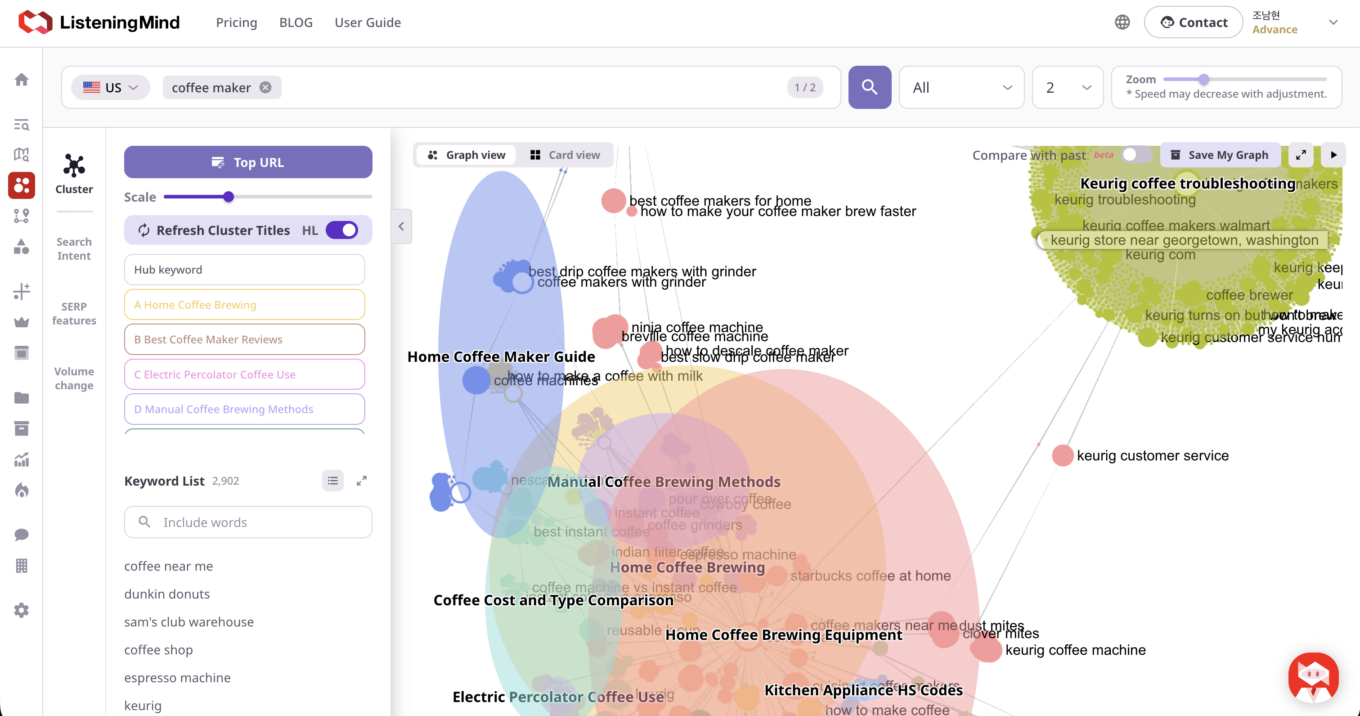
Possibly yes, and it’s easy to miss. These terms don’t get their own headline; they sit blended into the brand’s own keyword cluster, next to its ordinary shopping traffic. Pull up “coffee maker” in Cluster Finder and you’ll see Keurig’s cluster holds “keurig coffee makers” at 189,000 searches a month, right beside “keurig coffee maker problems” at 3,133 and “keurig not pumping water” at 2,066.
Those aren’t rounding errors. They’re real, ongoing malfunction language, just small enough next to the brand’s total volume that a share-of-search glance would scroll straight past it. And it isn’t a one-off: the same brand agreed to a documented $950,000 class action settlement over a K-Supreme power-loss defect.
Q3: A competitor keeps getting named in AI chat answers about our category. Do we need to panic?
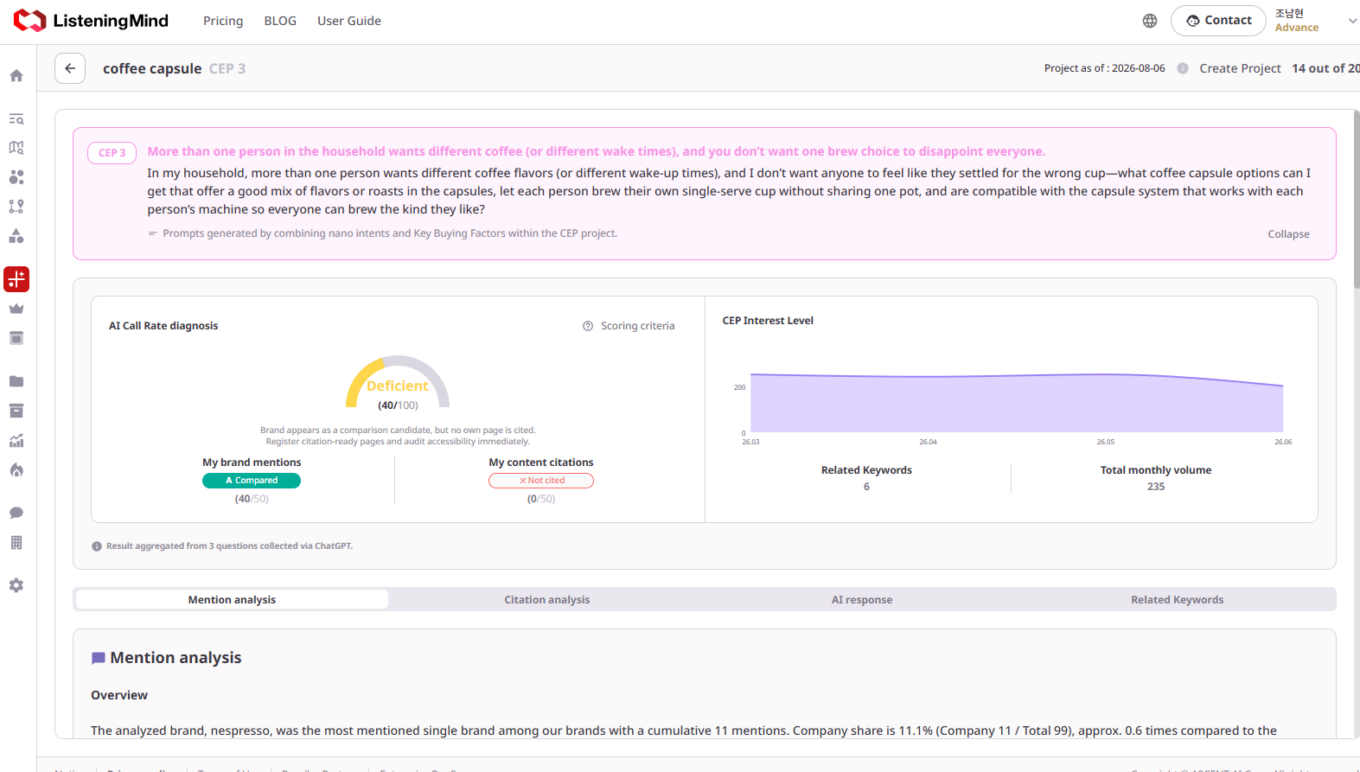
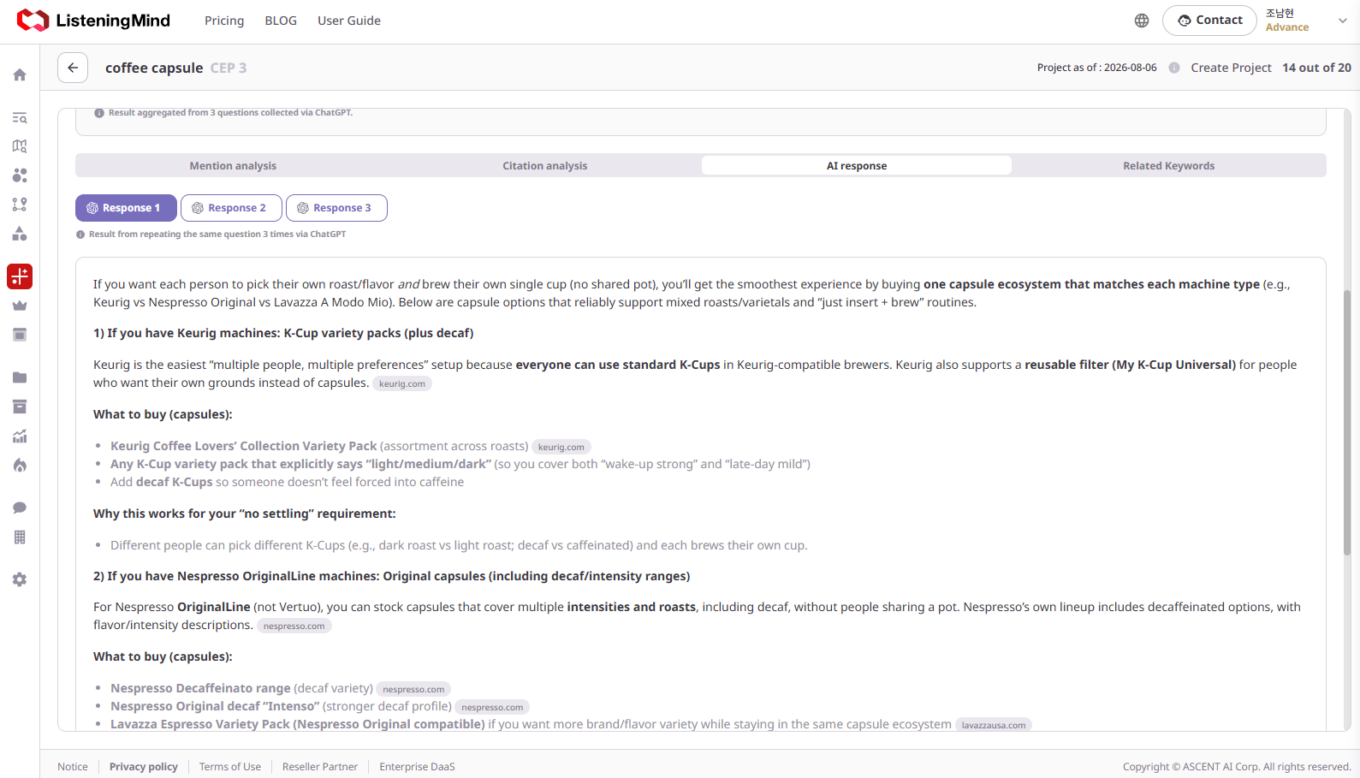
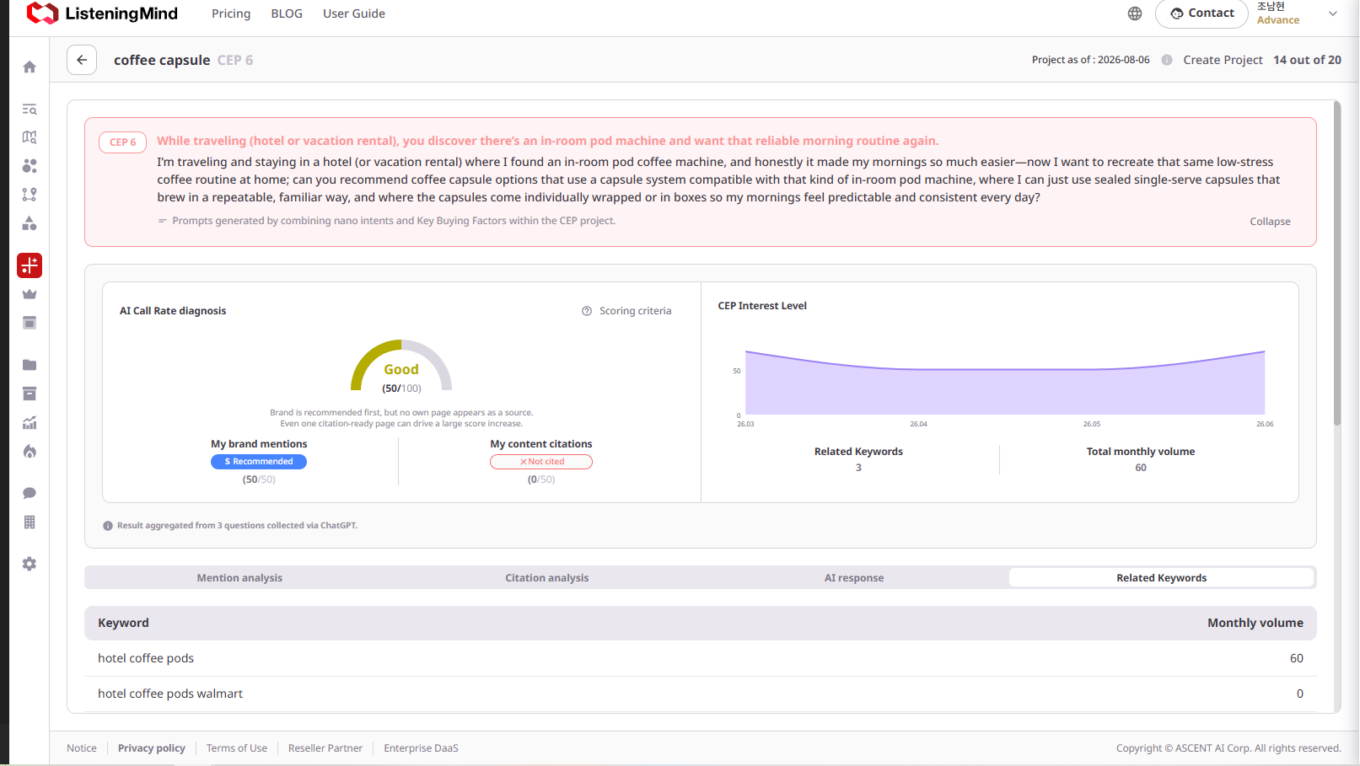
Depends what “named” means. On one buying occasion we checked, a brand was the single most-mentioned name across AI generated answers: an 11% mention share, ahead of every competitor sampled. It still scored “Deficient” on citation strength, because its own page was never the source the AI actually pointed to.
Being mentioned and being cited are two different outcomes, and only the second one sends anyone to your site. If your competitor is being talked about but not linked to, that’s a gap, not a loss.
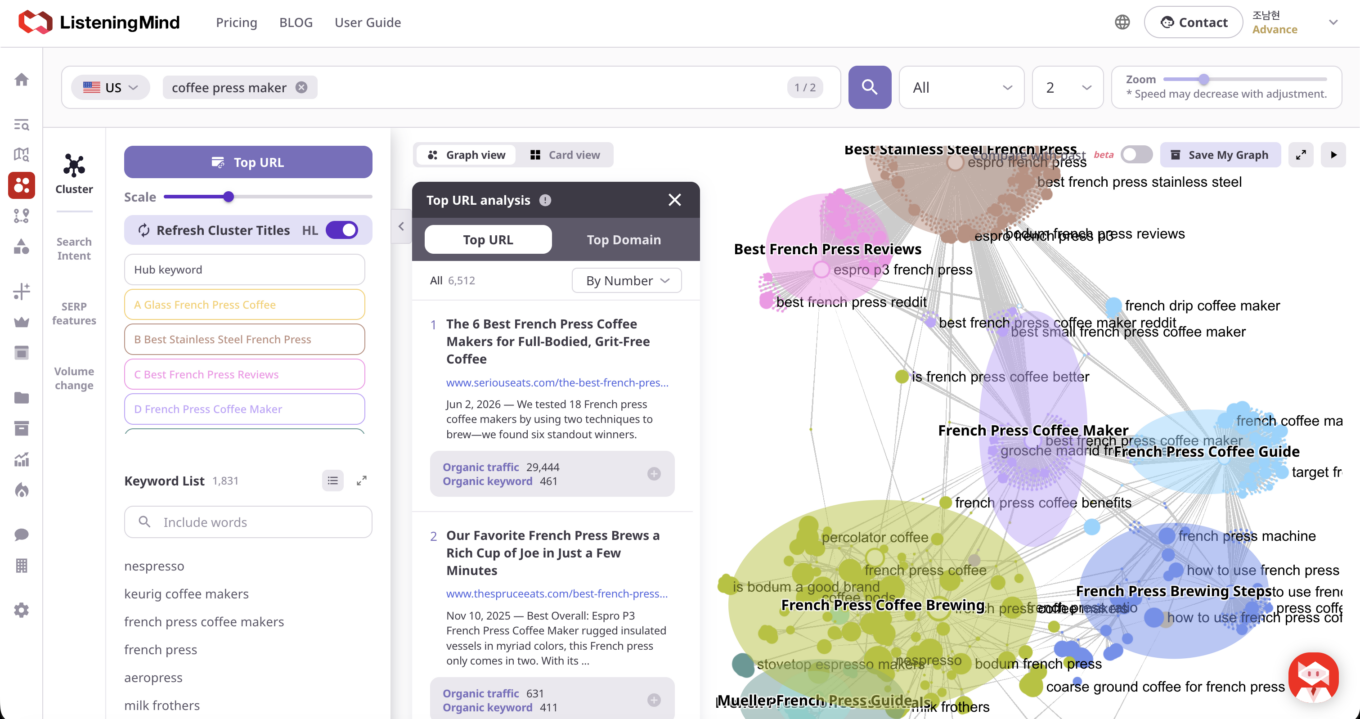
The same gap shows up in plain search, not just AI chat. Search “coffee press maker” in Cluster Finder and the platform’s own generated cluster label, “French Press Coffee Maker,” pulls up Top URL results dominated by Serious Eats, The Spruce Eats, and NYT Wirecutter, independent publishers, not brand sites.
Q4: Is there real demand for the sustainability angle, or is that just something our PR team wants to believe?
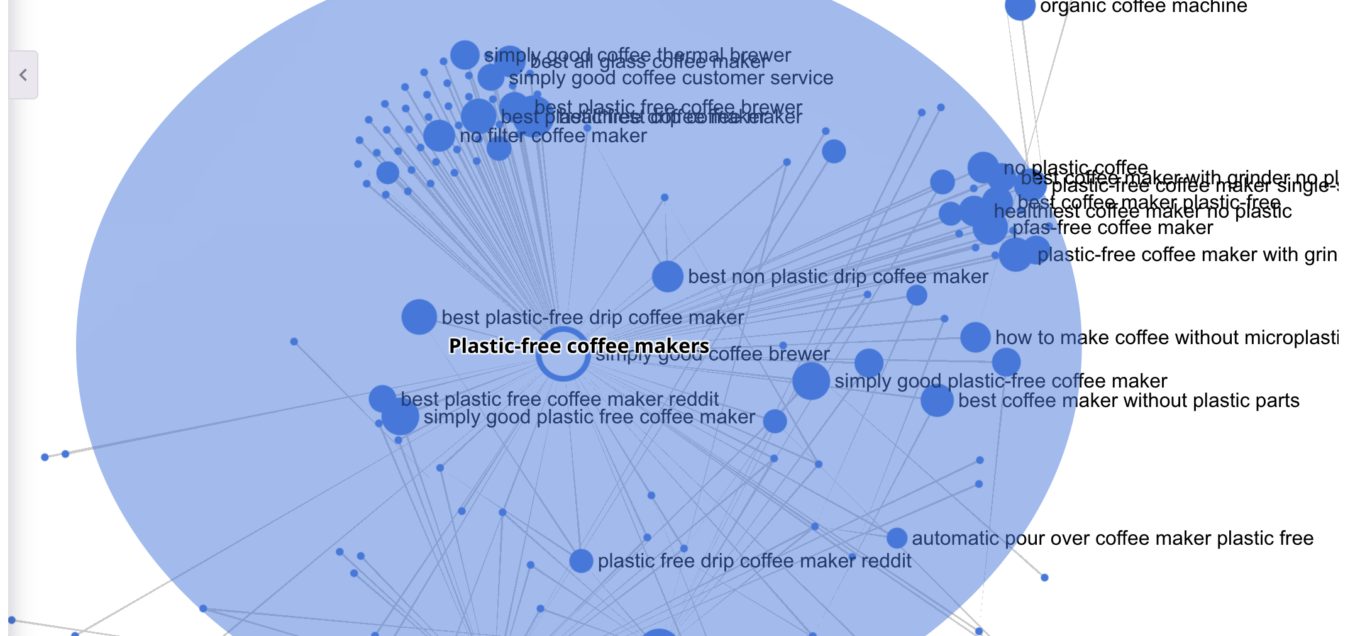
In this category, it’s real. “Plastic free coffee maker” and “no plastic coffee maker” together pull more than 41,000 searches a month in the US, more volume than most named brand comparison terms in the same set. No major brand in the data is clearly built around owning that specific claim, so if your team is weighing the sustainability angle, the demand is already there waiting.
Q5: Our #1 keyword has huge volume. Doesn’t that mean huge buyer intent?
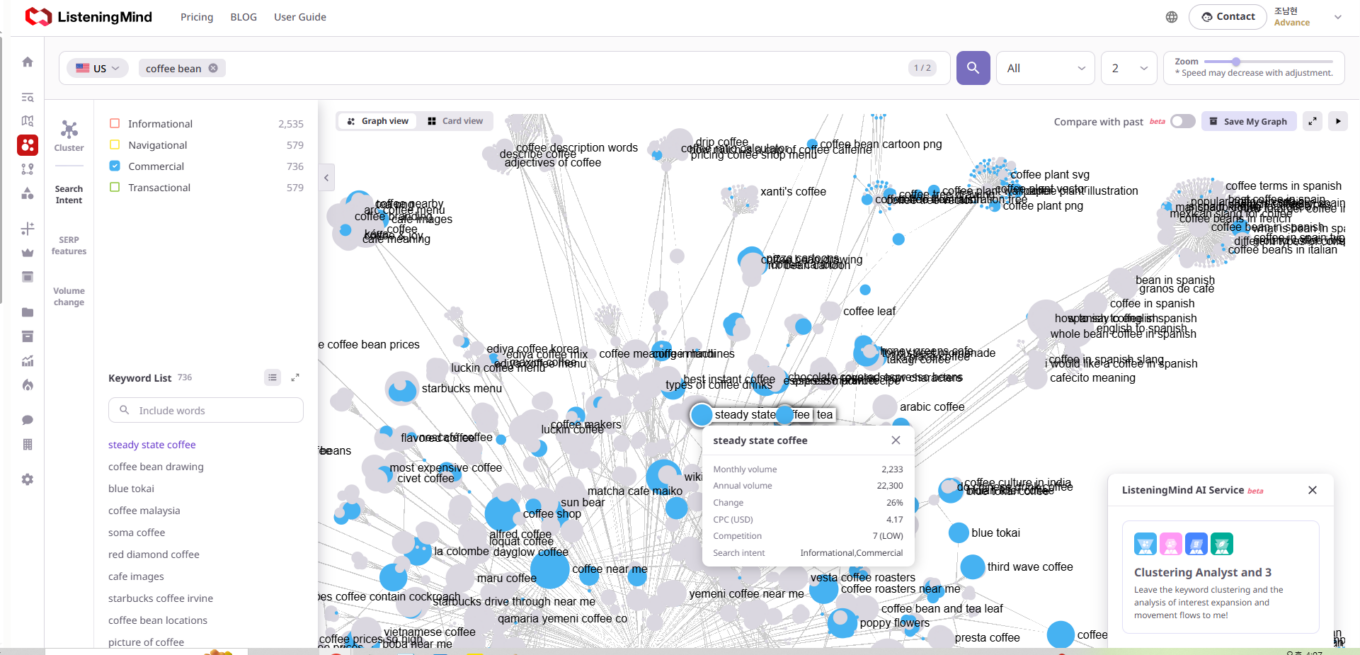
Worth checking before a campaign gets built on the assumption. One of the largest terms in this category breaks down as roughly four times more informational than transactional by search intent, and even that “informational” bucket turns out to be mostly two branded head terms getting classified that way, not an actual research trend underneath them.
Large volume and buying intent aren’t the same measurement, and a keyword report alone won’t tell you which one you’re looking at.
Q6: How do we find the actual moment someone decides to buy, not just people who search this word?
Look one level below the keyword, at the situation. In this category: someone switches from pre-ground to whole bean coffee, it tastes worse than expected the next day, and the fix isn’t a better bean. It’s realizing they need a grinder to get the freshness they paid for.
That specific bridge, from a taste complaint to an equipment purchase, doesn’t show up if you’re researching “who buys coffee grinders.” It shows up once you research what situation made someone start looking in the first place.
Six different questions, one instinct underneath all of them. Don’t trust the number you see first; check what’s sitting one layer beneath it. That held whether number was a shrinking keyword, a buried complaint cluster, an uncited mention, or 41,000 unclaimed searches.
Not rankings, Not surveys. The intent underneath both.
Got a question about your own category, or just curious what your customers actually think underneath the keyword? Tell us, and we’ll dig up the answer the same way we did here.

Hi, my name is Nam Hyun Cho, and I’m part of the Global team on ListeningMind’s Growth team.
If this content made you curious about what your own category looks like, let’s just look at it together — 15 minutes, your data, no slides.