Index
Search data shows creatine gummies now cluster around three unexpected entry points: GLP-1 medication users, parents of children with ADHD or autism, and travelers. None of them fit the traditional gym-and-fitness narrative.
A category entry point, or CEP, is the specific moment, situation, or reason a consumer thinks of a product category. Every category has more than one entry point, and each one exists somewhere in a consumer’s everyday life. Once a brand can name these moments precisely, it can decide who to reach, when, and with what message.
Search data is a reliable way to find CEPs. When people search, they type what they actually want to know, not the version of themselves they present elsewhere.
Our previous article looked at the growing interest in creatine gummies. This time, we used ListeningMind to analyze the category entry points behind that interest, and found three CEPs that sit outside the mainstream fitness narrative.
What Search Data Reveals About the U.S. Creatine Gummies Market: 3 Category Entry Points
CEP 1: Preserving Muscle Mass While on GLP-1 Medications
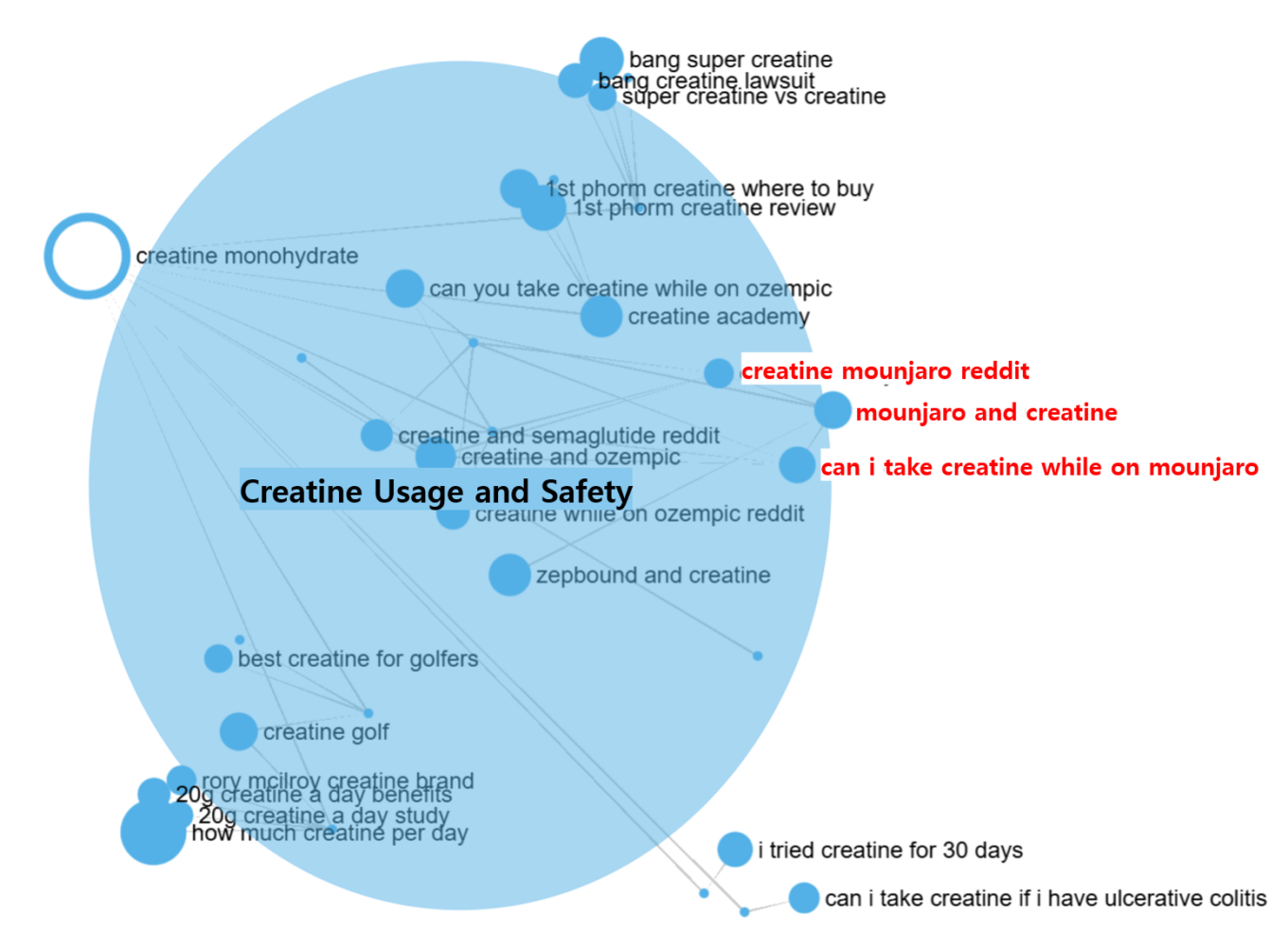
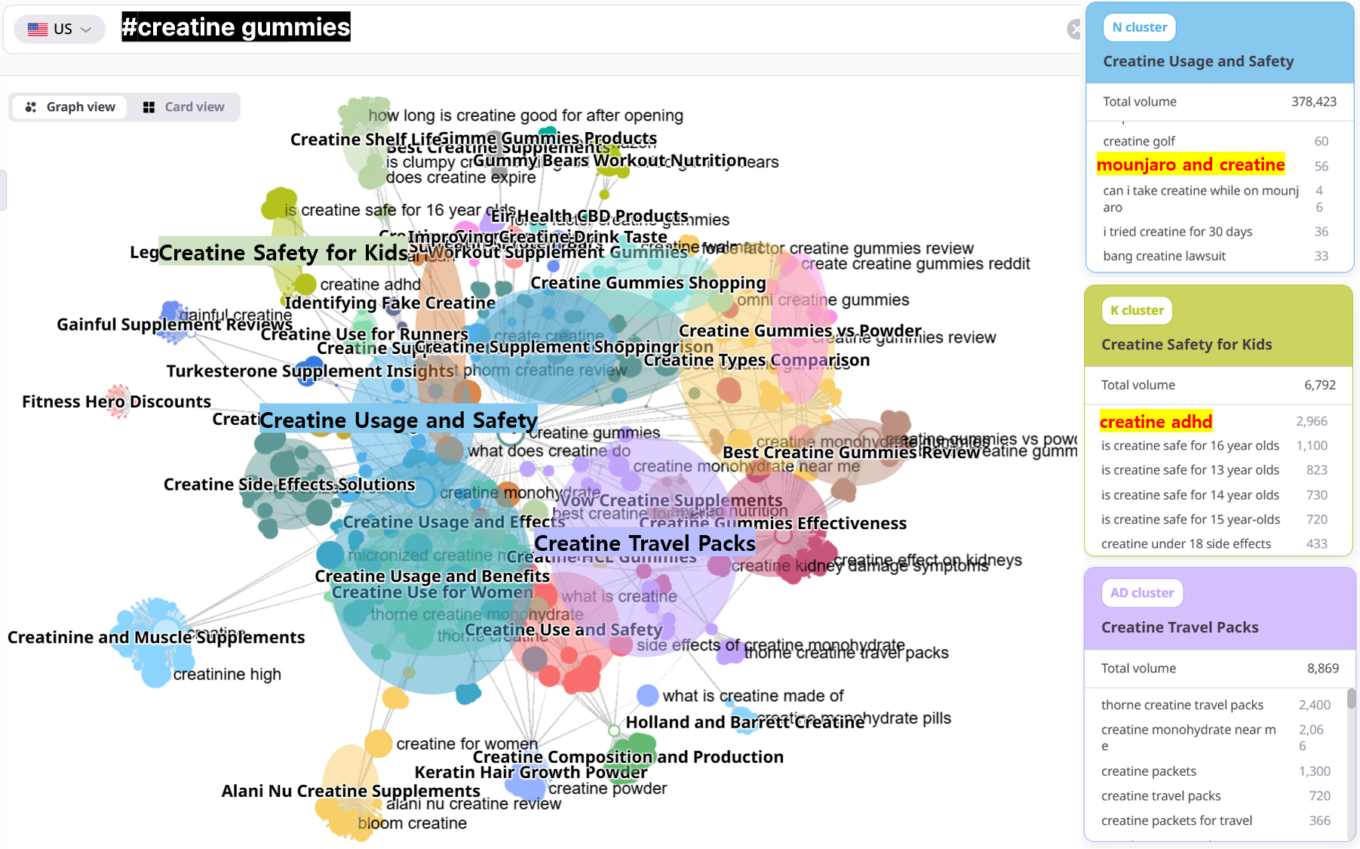
Keywords such as ‘creatine and ozempic’ (96 average monthly searches), ‘mounjaro and creatine’ (56 average monthly searches), and ‘zepbound and creatine’ (130 average monthly searches) appear together inside a cluster labeled “Creatine Usage and Safety”. These searches suggest that people using GLP-1 medications such as Ozempic, Mounjaro, and Zepbound are worried about muscle loss from rapid weight loss. They’re looking at creatine as a way to counter it.
Tracing this search journey with Path Finder shows a striking shift between three months ago and now.

Three months ago, searches entered through terms like ‘can i take creatine while on mounjaro’, ‘zepbound and creatine‘, and ‘mounjaro and weight lifting‘, and none of these paths connected any further. This pattern suggests a single, isolated question: can this medication be combined with creatine.
Today, most of these paths now lead into creatine gummies and branch out from there into effectiveness, side effects, and comparisons with powder. In just three months, GLP-1 users appear to have moved from researching whether creatine is safe to actively choosing gummies as the format.
CEP 2: Parents of Children With ADHD or Autism

A second cluster, labeled “Creatine Safety for Kids”, points to a different audience entirely.
Within this cluster, ‘creatine adhd’ has an average monthly search volume of 2,966 and has grown consistently, from 320 searches in June 2022 to 3,600 in March 2026. Alongside it, safety-related searches such as is creatine safe for 16 year olds have also been climbing.

The same cluster contains terms like ‘creatine for kids with autism’, ‘creatine and neurodivergence’, and ‘creatine deficiency autism‘.
The ADHD-related searches have already become a well-established CEP. The autism-related terms only reached measurable volume as recently as January 2026. This CEP is still in its early stages.
This pattern doesn’t fit the typical strength- or performance-driven creatine buyer. It appears to reflect parents researching creatine as part of a developmental support routine for their child, a motivation that sits well outside the fitness market.
CEP 3: Solving the Post-Purchase Problem of Travel
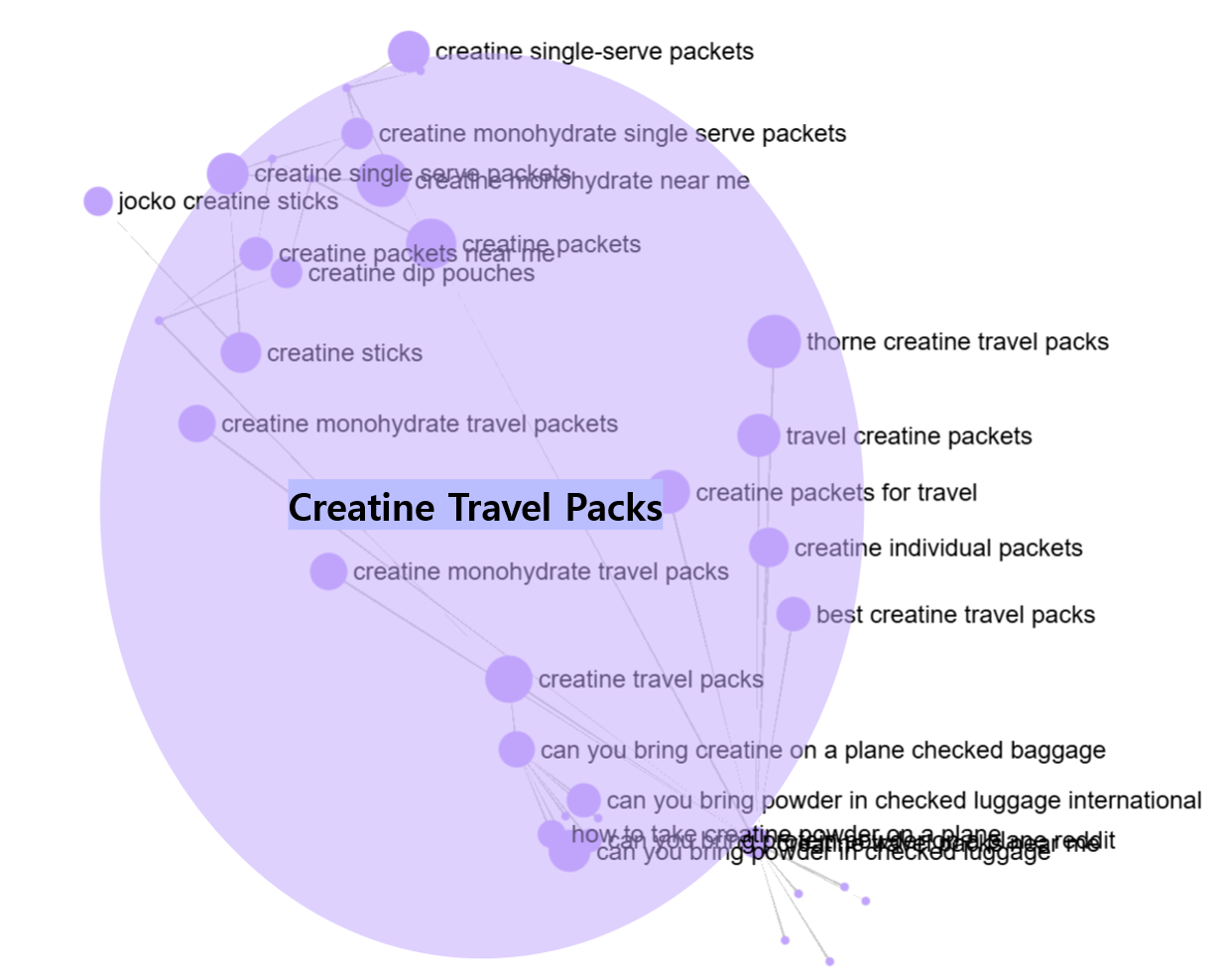
The third cluster, “Creatine Travel Packs”, centers on a different kind of need.
These searches point to people who want a version of creatine that travels well, not just for daily use but specifically while away from home.
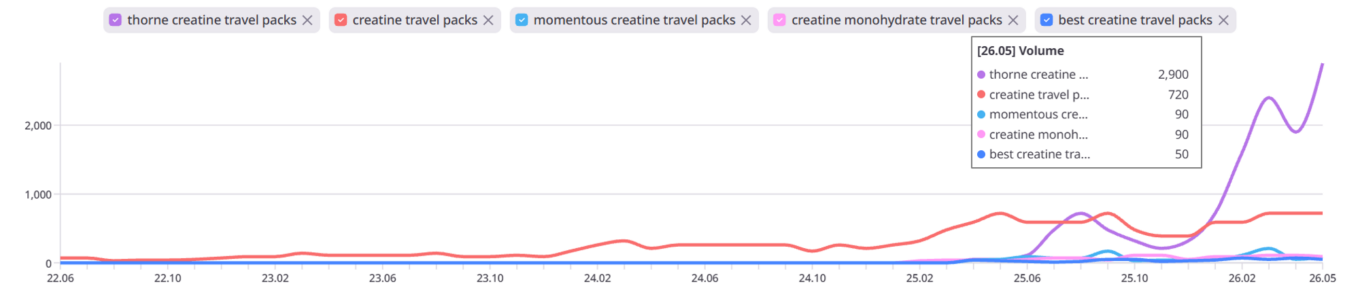
Source: ListeningMind Query Finder
‘thorne creatine travel packs’ had zero recorded search volume through March 2025, then rose sharply from April 2025 onward, reaching 2,900 average monthly searches by May 2026, a trend of plus 81 percent. creatine packets grew over the same period too, from 110 to 1,300 searches.
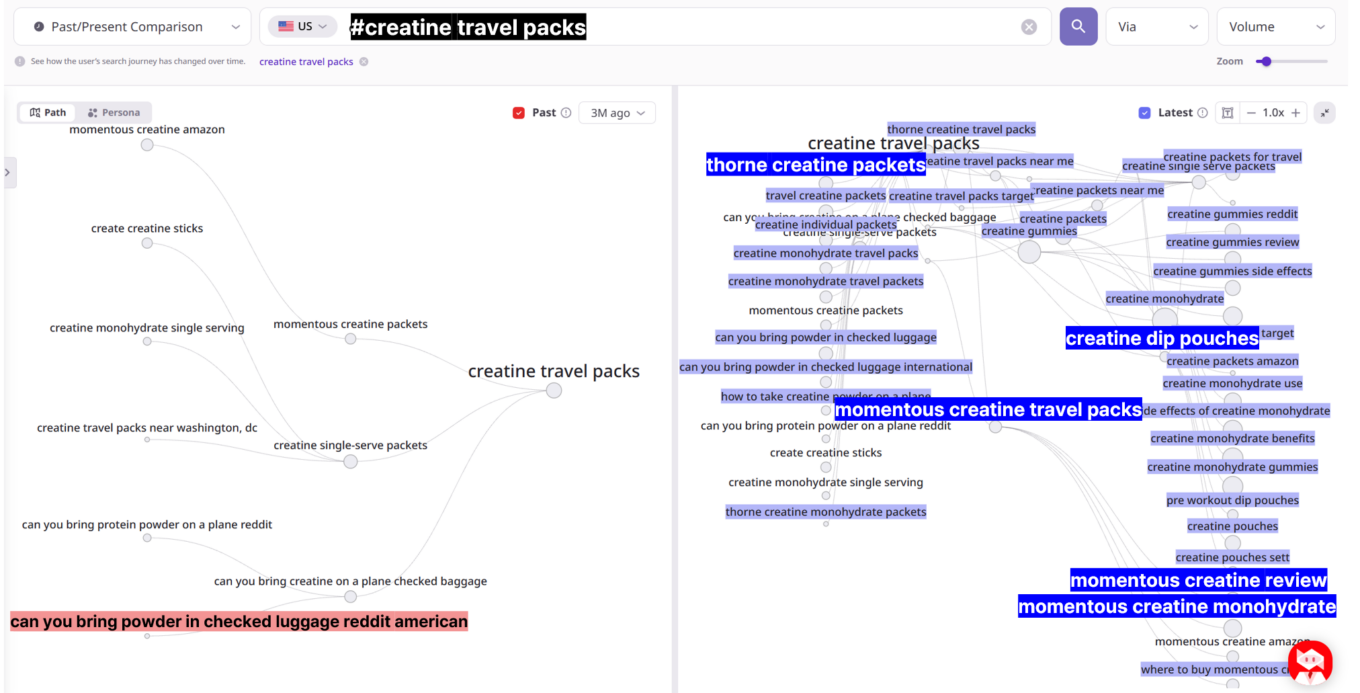
The search journey here changed substantially over three months as well.
Three months ago, the dominant question was can you bring creatine on a plane checked baggage, a TSA-style logistics concern.
Today, that concern still appears, but the network around it has expanded considerably. Two specific brands, Thorne and Momentous, now show up as connected nodes. The paths also extend into creatine gummies and creatine dip pouches, alternative formats and containers built around portability.
This suggests existing powder users are running into a post-purchase problem: how to carry creatine while traveling. They’re searching for portable products, like gummies or pouches, to solve it. Brands may want to consider messaging built specifically around travel occasions, not just everyday use.
What These 3 CEPs Reveal About the Creatine Gummies Market
- GLP-1 co-use: an entirely new entry point, driven by consumers on weight-loss medications trying to preserve muscle mass
- Parents of children with ADHD or autism: a motivation that has nothing to do with fitness, and is easy for brands to overlook
- Travel packs: a growing need for portable formats, both for everyday life and specifically while traveling
No single message reaches every audience. The moment a consumer thinks of creatine gummies might not be the gym locker room at all. It could be a doctor’s office after picking up a GLP-1 prescription, a late-night search about a child’s development, or a suitcase being packed the night before a trip.
Identifying each of these moments, and building messaging and product design around them, is what will determine who captures the next wave of growth.
FAQ
A. A category entry point is a specific moment, situation, or reason that leads a consumer to think of a product category. A single category typically has several CEPs, each tied to a different motivation or context.
A. Search keywords tend to capture what someone genuinely wants to know at that moment, without the filtering people apply in surveys or social posts. Analyzing what people search before and after a term reveals the psychological path leading up to a purchase.
A. Most of the related keywords went from zero search volume to measurable volume between late 2023 and 2024, making this a CEP that has emerged only in the past two to three years. The search journey itself has also changed significantly in just the last three months.
A. Rather than relying on one message for every audience, brands should consider distinct touchpoints for each CEP: safety-focused messaging for GLP-1 users, accurate age-specific information for a broader range of consumers, and product lines built around portability.
A. In the search path data, Thorne appears as the largest and earliest hub, with Momentous following behind it. thorne creatine travel packs has climbed to 2,900 average monthly searches, compared to just 90 for momentous creatine travel packs. This suggests brand-specific search intent has already taken hold within the travel occasion.