
Index
Marketers have long believed that nurturing loyal fans is the engine of growth. It feels intuitive. But decades of evidence-based research tell a different story.
True growth rarely comes from people who already love a brand. It comes from the much larger group who barely notice it, buy occasionally, or simply don’t care. These un-customers dominate the market — and understanding them reshapes how growth really works.
Penetration, Not Loyalty, Drives Growth
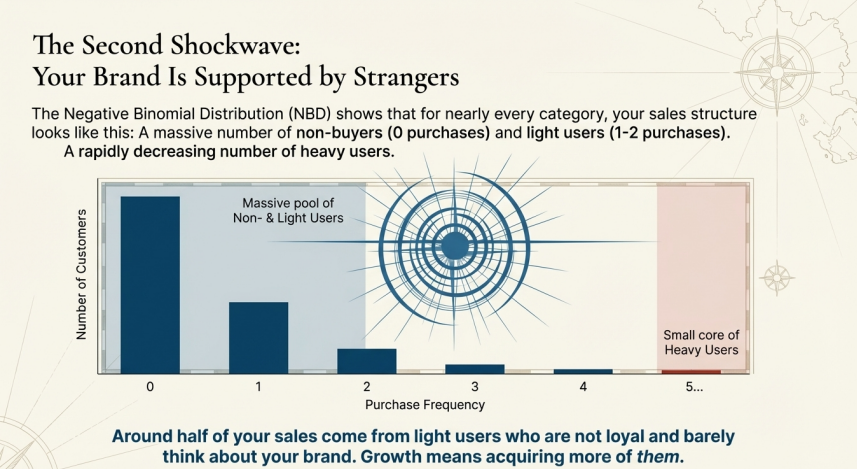
Research by Binet, Field, and Byron Sharp consistently shows that growth is driven by penetration, not loyalty. In most categories, a significant share of sales comes from light users with little emotional connection to the brand.
Reaching more of these casual buyers has a far greater impact than deepening loyalty among existing fans. This finding challenges one of marketing’s most cherished assumptions — that the path to growth runs through the people who already love you.
The Problem With Demographic Personas
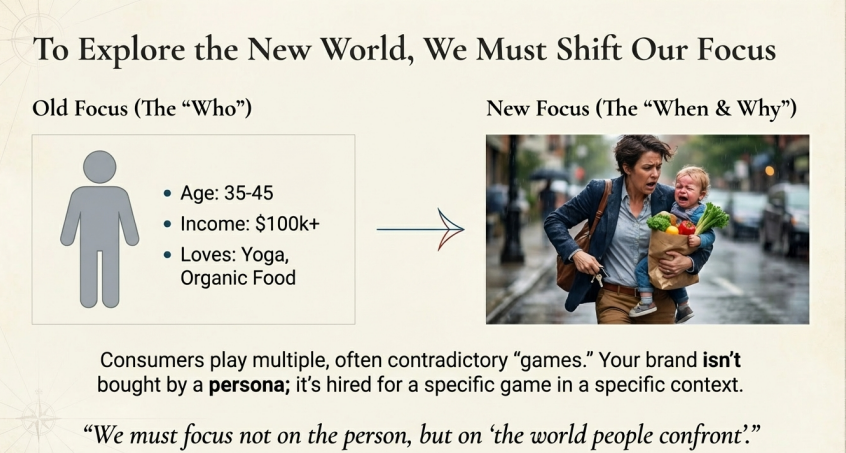
Un-customers cannot be understood through age, gender, or income brackets. What matters is the situation they are in.
Consumers are not irrational. What seems inconsistent from a marketer’s perspective often makes perfect sense within the consumer’s own context. The problem is not their behavior — it’s the marketer’s distance from real decision-making situations.
Growth emerges when brands understand the moments when a category becomes relevant and the contexts where a brand naturally fits. These Category Entry Points offer a practical lens for how people actually decide to buy.
Changing Meaning, Not Just Product
Often, the key to reaching un-customers is not changing the product — it’s changing its meaning.
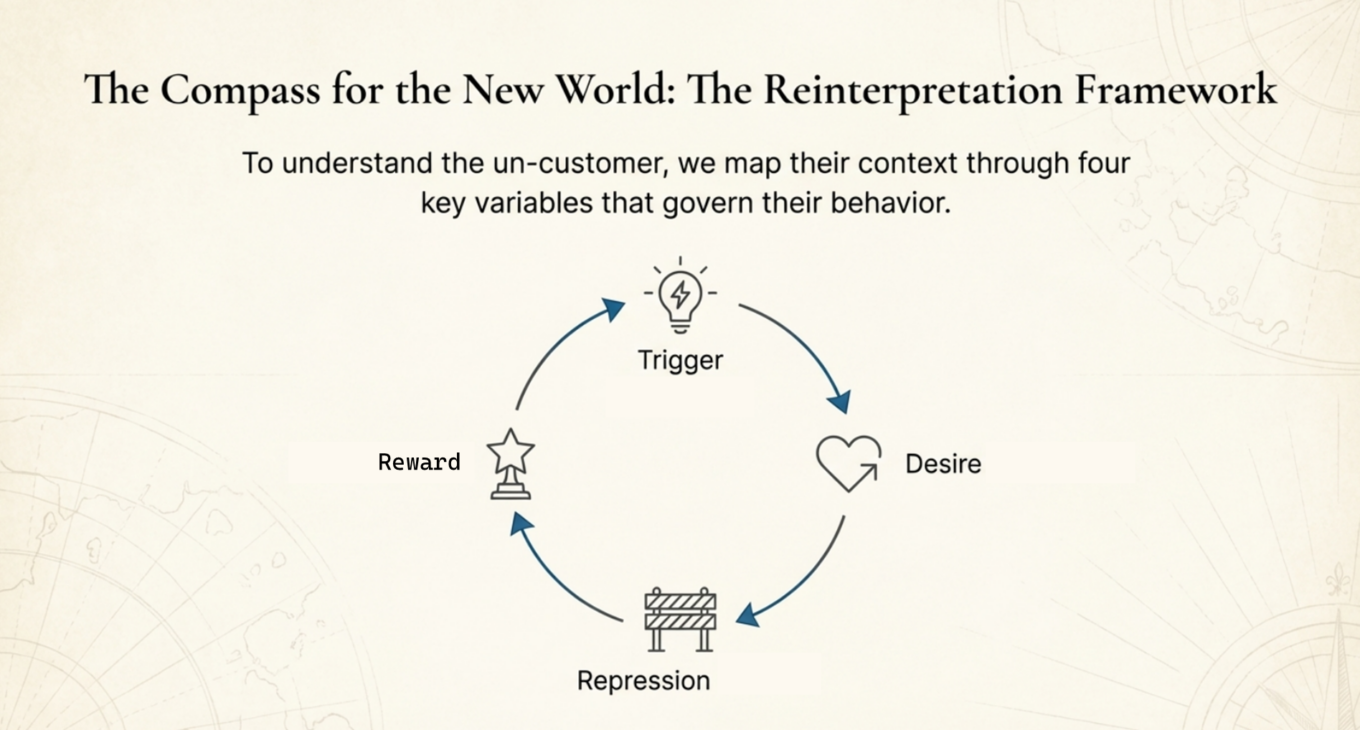
Reinterpretation aligns a product with motivations consumers already have. A child who resists bath time embraces it the moment it is reframed as another form of play. The product hasn’t changed. The context has.
This kind of reframing is one of the most underutilized tools in marketing — and one of the most powerful for unlocking demand from people who were previously indifferent.
The Double Jeopardy Law
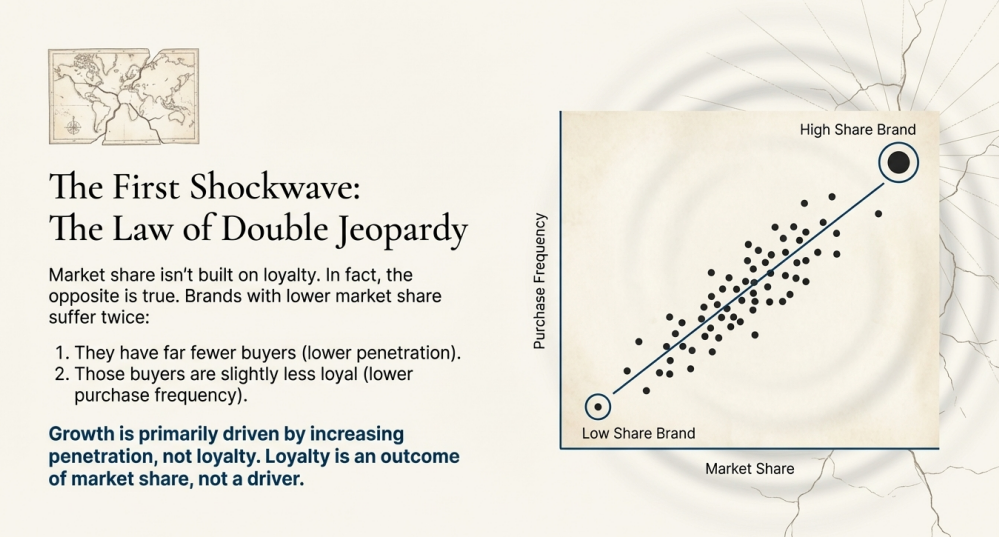
The Double Jeopardy Law reinforces why reach matters so much. Smaller brands face two compounding challenges: fewer buyers and slightly lower loyalty among those buyers.
This makes expanding reach essential, not optional. Loyalty follows scale — not the other way around. Brands that focus on retention before penetration are solving the wrong problem first.
Where Real Growth Has Always Been Hiding
Ultimately, a brand’s greatest obstacle is not competition. It’s indifference.
Brands grow when they understand un-customers, enter their world, and connect with the everyday situations that shape their decisions. When marketers shift focus from fans to those who are not yet paying attention, they discover where real growth has always been hiding.
The un-customer is not a problem to solve. They are the opportunity most brands have been overlooking.