
Index
Most marketers know the feeling. You spend heavily, run the classic playbook, and still question whether any of it is truly driving growth.
Decades of evidence-based research suggest that many of our most familiar beliefs about marketing are incomplete — or simply wrong. Here are five data-backed truths that reshape how brands actually grow.
1. Real Growth Comes From New Customers, Not Loyal Ones
Loyalty is not the main growth engine. Across categories and markets, the majority of a brand’s expansion comes from penetration — new people buying the brand for the first time.
Even heavy, loyal users churn faster than most brands expect. Relying on them as the primary growth source is risky. Consistent reach and a focus on driving trial among new buyers is what separates growing brands from stagnating ones.

2. Brand Image Follows Sales — Not the Other Way Around
We often assume that building a stronger brand image will eventually drive more sales. The data tells a different story.
Positive brand perceptions tend to expand naturally as more people buy and use a product. Consumer attitudes explain only a small portion of actual purchase behavior. Rather than investing heavily in “brand love” campaigns, brands that prioritize distribution, trial, and performance marketing see more reliable, measurable growth.
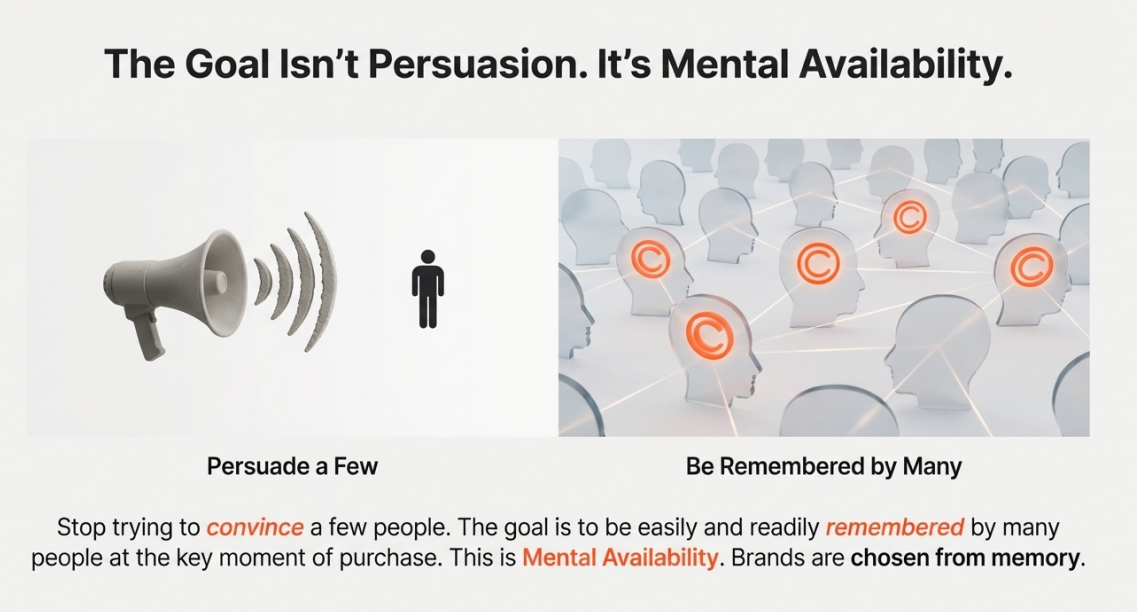
3. Your Job Is Not Persuasion. It Is Being Remembered.
Advertising works primarily by refreshing memories — not by changing minds.
The goal is to build Mental Availability: the probability that your brand comes to mind quickly in a buying moment. Simple, consistent, distinctive cues matter far more than complex arguments or detailed explanations. When a need arises, the brand that is easiest to recall wins — regardless of which brand has the most compelling rational case.
4. It Is Not About Who You Target, but When
Demographic targeting has long been the default approach. But Category Entry Points — the situations that trigger category demand — are a more powerful lever for growth.
Brands grow by owning more moments of need, not by narrowing their audience. Yakult succeeded by adding a new CEP — improving sleep — on top of its existing gut-health associations. The product didn’t change. The moments it owned expanded. And so did its market.
5. Your Brand Is a Sensory Toolkit
A brand lives in the consumer’s senses, not just their rational mind.
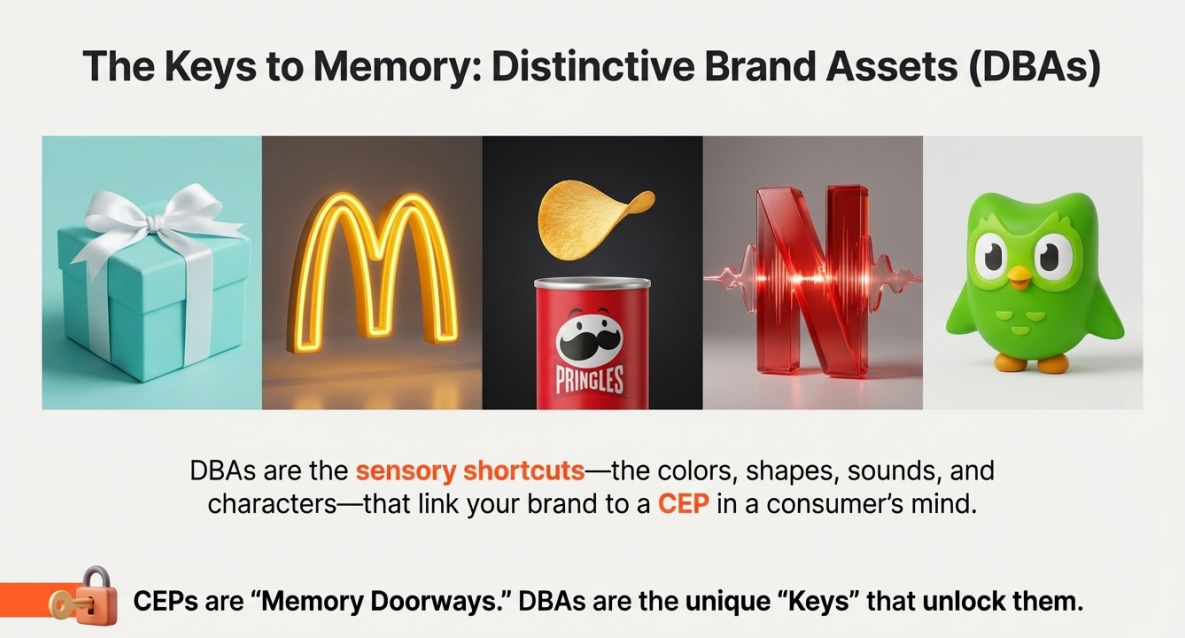
Distinctive Brand Assets — color, shape, characters, sounds, slogans, and packaging — make a brand instantly recognizable before conscious evaluation even begins. Strong DBAs dramatically increase recall and are one of the most reliable, underutilized levers for growth. Brands that invest in building and protecting these assets compound their mental availability over time.
The Real Job of Marketing
Marketing’s real job is to build memories at scale.
Growth comes from reaching more people, embedding your brand in more situations, and doing it with distinctive cues that make you easy to remember at the exact moment someone is ready to buy.
The key question for every marketer is simple: how easily does your brand come to mind when someone is ready to act?