Index
For years, discovering anything online meant opening endless tabs, searching, comparing, and hoping you made the right choice. AI agents are about to end that experience entirely.
They will filter information, understand context, and recommend only what fits a user’s specific needs. This creates a fundamental new challenge for brands: the goal is no longer just to be seen. It’s to be selected.
Brands Become Coordinates, Not Names
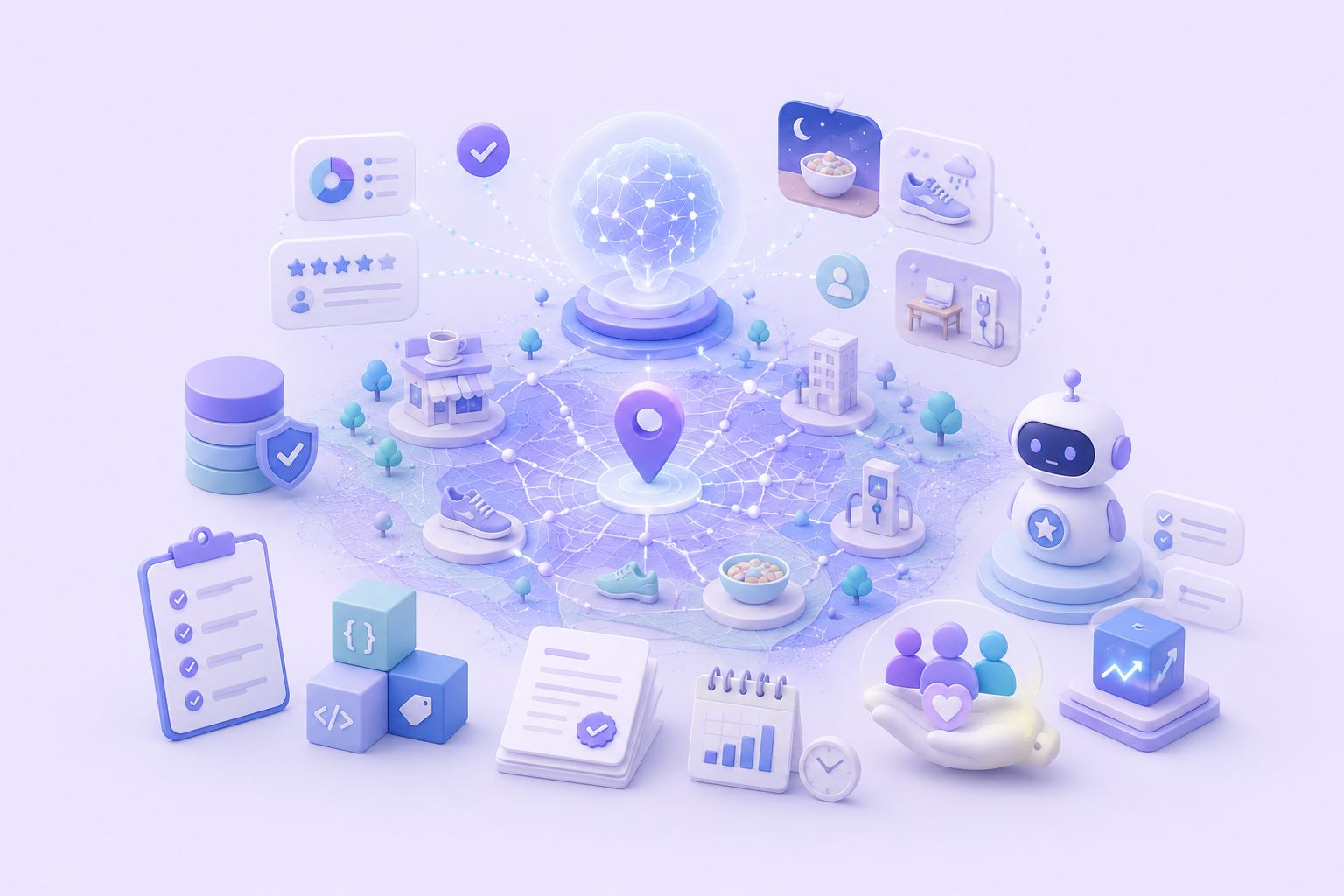
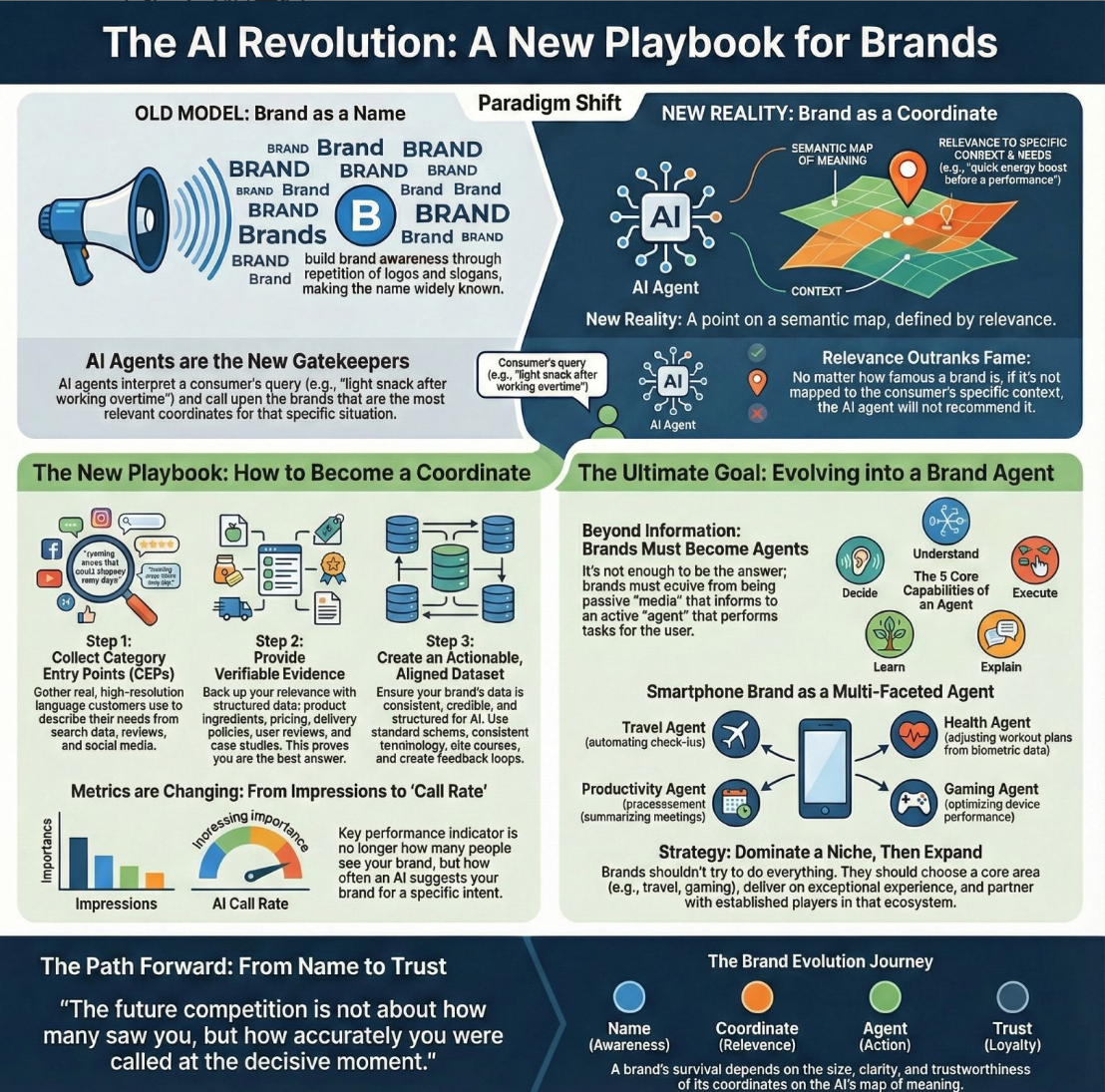
AI does not remember brands the way people do. It organizes them as coordinates in a semantic map — a structured space where meaning, context, and relevance determine what gets surfaced.
When someone asks for “a light meal after working late,” the AI doesn’t run a keyword search. It finds the brands whose positioning sits closest to that specific meaning in its knowledge structure.
Winning in this environment requires occupying clear, relevant positions on this map — not simply repeating logos or slogans across channels.
Intent Becomes a Scene
Consumer intent is no longer defined by broad demographic needs. AI interprets intent as specific, high-resolution situations: gentle protein on an empty stomach, shoes that grip on wet streets, a café with charging outlets nearby.
These are Category Entry Points — the real moments when purchase decisions begin. They are specific, contextual, and emotionally loaded. Brands that understand and serve these scenes will be the ones AI recommends. Brands that rely on broad positioning will be invisible to the systems now shaping what people find.
Structured Data Matters More Than Taglines
AI agents don’t respond to clever messaging or memorable taglines. They rely on structured, consistent, and verifiable information.
Brands that want to appear in AI-generated recommendations need to:
- Organize information in machine-readable, standardized formats
- Use consistent language and terminology across all channels and platforms
- Keep content current and close gaps in their knowledge base quickly
- Build a content architecture that AI can navigate, extract from, and cite confidently
The new performance metric emerging from this shift is the call rate — how often a brand is recommended for the specific scenes it wants to own. It’s a more meaningful measure of brand health than impressions or clicks.
Brands Must Become Agents Themselves
The most advanced brands will eventually evolve beyond products and services into agents that act on behalf of consumers.
They will understand intent, make decisions, complete tasks, explain their reasoning, and improve over time. A travel brand that checks you in automatically. A health brand that adjusts your routine based on biometric data. A productivity tool that prepares meeting summaries before you ask.
This level of capability requires deep integrations, strategic partnerships, and a fundamental rethinking of what a brand is — and what it does for the people who use it.
The Future Belongs to the Most Useful Brands
Attention is scarce. The search era gave us choice but consumed our time. The agent era gives that time back — by filtering, deciding, and acting on our behalf.
Brands that succeed in this environment will not be the loudest. They will be the most reliable, the most precise, and the most genuinely helpful at the exact moment someone needs them.
When someone asks an AI for a recommendation, will your brand be the one that gets called?