Index
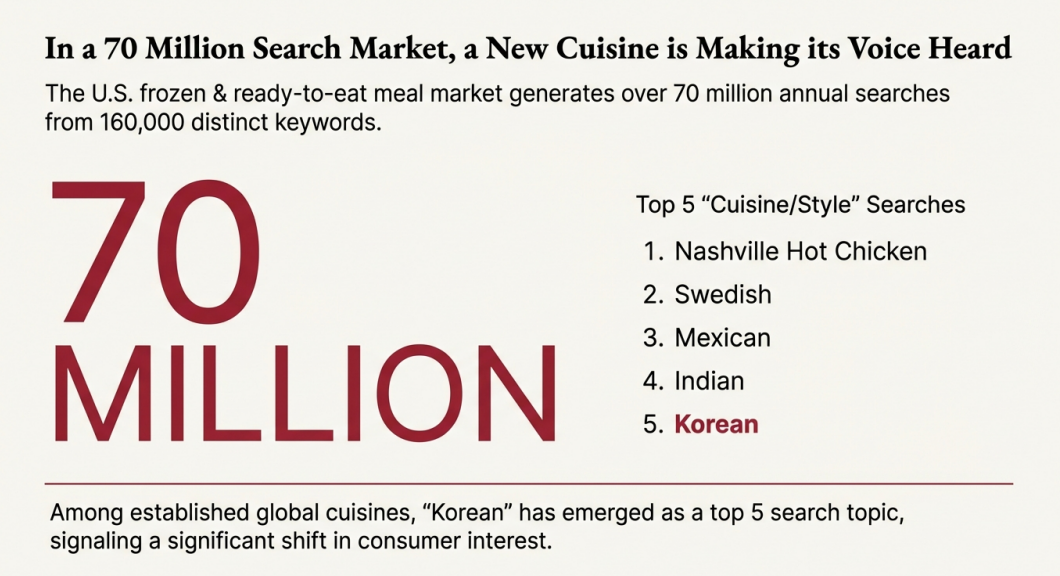
K-food is everywhere in America today. But the real story isn’t just viral spicy ramen challenges or packed Korean BBQ restaurants.
A large-scale analysis of U.S. Google searches from ListeningMind reveals what Americans are truly curious about — and how Korean food is quietly becoming part of everyday life.
1. Americans Are Learning Korean Food Vocabulary
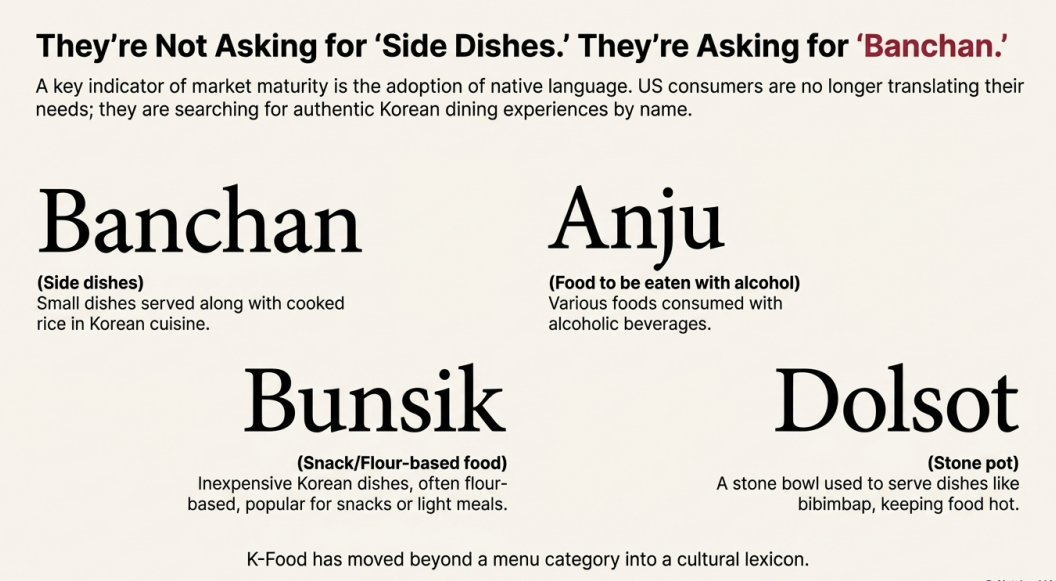
Searches aren’t just for kimchi or bibimbap anymore. Americans are now using untranslated Korean terms like banchan, anju, bunsik, and dolsot — without looking for an English equivalent.
This matters. It signals that K-food isn’t just being consumed. It’s being culturally understood. When a cuisine earns its own vocabulary in a new market, it has moved beyond novelty into genuine adoption.
2. Korean Food Is Becoming a Source of Comfort and Healing
When Americans feel unwell, they’re increasingly turning to Korean comfort dishes. Searches for samgyetang, jook, and similar wellness-oriented foods are rising fast.
This reveals a hidden side of demand that goes far beyond “spicy trends.” Non-spicy, health-focused K-food is finding its own audience — people seeking warmth, recovery, and nourishment rather than heat or novelty.
3. K-Dramas and TikTok Directly Drive What People Eat
Searches like “Kpop Demon Hunters ramen” show how Korean media instantly shapes real cooking and shopping behavior.
The journey is measurable and remarkably direct: TikTok → product search → “where to buy” → Walmart or Amazon. Entertainment isn’t just influencing culture — it’s driving purchase decisions in real time.
4. Buldak Is Now a Brand Ecosystem
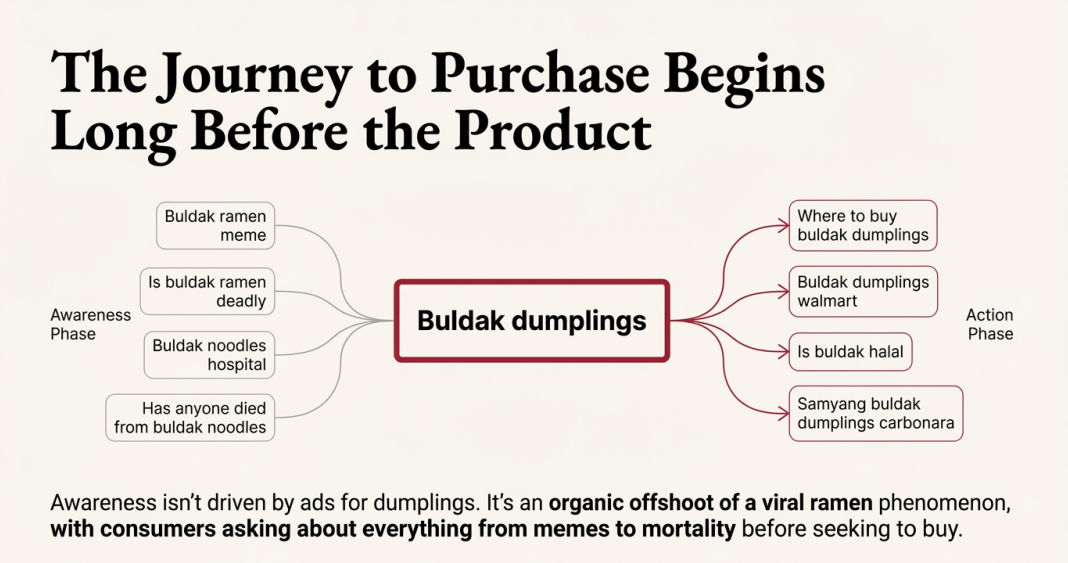
“Buldak ramen” generates around 370,000 monthly U.S. searches — significantly more than Shin Ramyun. But what’s more interesting is where those searches lead.
Consumers aren’t stopping at the original product. They’re exploring Buldak dumplings, comparing heat levels across flavors, and building a relationship with the brand that extends well beyond a single SKU. Buldak has become a brand universe, not just a product.
5. Korean Snacks Have Become a Curated Lifestyle Category
With more than 410,000 annual searches, K-snacks are now firmly mainstream. But the nature of those searches reveals something deeper.
People aren’t just searching for snacks. They’re searching for curated experiences — “Korean snack box,” lifestyle-fit options like healthy, spicy, vegetarian, or kid-friendly varieties. K-snacks have become a category people actively explore and personalize.
The Bigger Picture
These search patterns point to a deeper truth: K-food in America has moved from novelty to daily life.
Comfort, culture, entertainment, and personal lifestyle are all wrapped into how Americans now relate to Korean food. The demand is real, it’s growing, and it’s more nuanced than most brands realize.
The question for brands entering or expanding in this space is simple: Are you listening closely enough to see where consumer demand is heading next?