Index
Most marketing teams collect data. Very few actually listen to it.
When we talk about “intent,” it’s easy to picture keywords, dashboards, and charts. But the real power of intent data isn’t in the numbers themselves — it’s in the human story hidden inside them. Search behavior is not just a list of queries. It’s a trail of clues that reveals fear, desire, hesitation, and hope.
To read that story clearly, we use something called an Intent Map.
What Is an Intent Map?
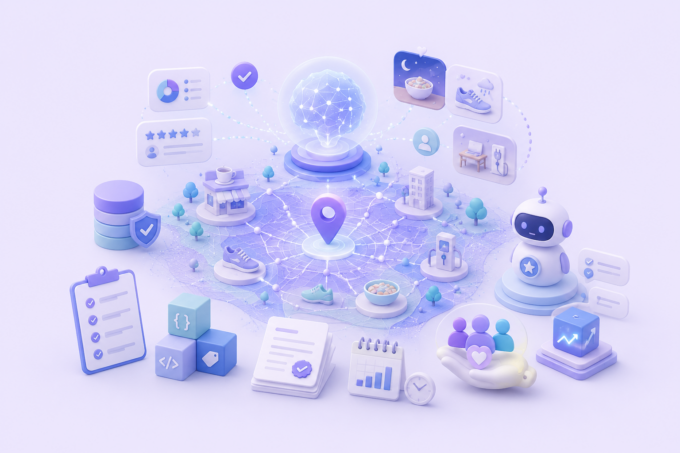
An Intent Map visualizes the entire customer journey — not as a clean funnel, but as a sequence of questions consumers ask when no one is watching.
When someone moves from:
- “What should I consider?”
- “What’s the downside?”
- “Is this brand trustworthy?”
…they aren’t simply shifting keywords. They’re shifting emotions.
An Intent Map captures this movement. It shows the moments where curiosity becomes comparison, comparison becomes doubt, and doubt becomes a need for reassurance. It reveals when people feel overwhelmed, when they need validation, and when they’re finally ready to decide.
Data Is Emotional — If You Know How to Read It
Marketers call it “data.” Consumers call it “life.”
Every keyword is a compressed human need:
- “40s skincare routine simple” = I’m too busy and tired to figure this out.
- “meal ideas when exhausted” = Please make my evening easier.
- “best stroller for apartments” = I don’t want to make a costly mistake.
- “electric car charging inconvenient?” = I’m afraid my lifestyle won’t fit.
Data becomes emotional the moment you stop treating it as text and start reading it as confession. Consumers won’t say these things in a survey. But they will type them into a search box at 11:47 p.m.
That’s why search intent is the most honest form of research we have.
When we connect these emotional signals into a journey, the Intent Map becomes more than a strategic tool — it becomes a psychological portrait of the market.
The Strategic Value of an Intent Map
Brands don’t gain relevance by shouting louder. They gain relevance by appearing at the exact moment a consumer’s question becomes a need.
That’s what an Intent Map makes possible. Instead of guessing what your audience cares about, you can see:
- The moments of friction
- The invisible fears
- The unspoken motivations
- The contexts that trigger need
- The language consumers naturally use
This is how intent transforms tactics into empathy.
From Analysts to Empathists
When teams begin working with intent data, a pattern emerges. We stop asking, “How do we drive traffic?” and start asking, “What does the customer need in this moment, and how can we help?”
The best marketers today aren’t just analysts or storytellers — they’re both. They turn thousands of fragmented keywords into a coherent emotional map.
An Intent Map is not about data structure. It’s about human structure.
Understand the intent behind the search, and you understand the market.