Index
The difference between growing brands and stagnant brands ultimately depends on how broadly and continuously they secure Category Entry Points (CEPs), and how effectively they attract former non-customers into becoming new customers. The more moments in which consumers recall a brand in specific situations, the more naturally new customers will flow in, leading to market expansion and long-term growth.
CEP Strategy to Unlock Growth

Stagnant brands usually possess only a small and limited set of CEPs. As a result, the number of situations in which consumers recall these brands is very restricted. They rely heavily on repeated purchases from existing customers, which clearly limits their potential for growth. In contrast, growing brands secure multiple CEPs that appear across various everyday contexts. These multidimensional memory cues enable the brand to be naturally evoked in many different purchase moments. Consequently, the pathways for attracting new customers widen, allowing the brand to sustain long-term growth momentum.
A CEP is not merely a list of situations. It is a mechanism that expands the brand’s mental availability. The more CEPs a brand has, the more frequently it is recalled, increasing its likelihood of being chosen before competitors. The essence of brand growth lies in the continuous expansion and strengthening of CEPs — they are the most important strategy for broadening a brand’s market presence and securing a steady base of new customers.
However, a critical shift in perspective is required here. Expanding CEPs is not simply a technical task of increasing the number of situations in which a brand is recalled. It is the process of understanding the rules of the game that operate in the world of non-customers. Most brands are familiar with the language and behavior of customers who already like them, who repeatedly buy them, and whose faces are familiar. However, the majority of the market consists of non-customers — people who do not recall the brand at all. In this world of non-customers, the brand logic that companies take for granted does not work at all.
No matter how much customer data a brand accumulates, and no matter how sophisticated its CRM or targeting becomes, such data reflects only the behavior of people who have already shown interest in the brand. Non-customers do not leave any behavioral traces related to the brand, so they leave no data. Their absence in the data means that they do not appear in the strategy either. This traps companies in a state of not knowing what they do not know — a state of double ignorance — leading them to overlook the very customers who are responsible for future growth.
It is not that non-customers lack CEPs. When placed in certain situations, they also think of categories such as drinking coffee or ordering fried chicken. The problem is not the absence of CEPs — it is that the existing CEPs are not connected to our brand. The category entry points exist, but our brand is not included among the available options recalled in those moments.
Therefore, CEP strategy involves two tasks: identifying the situations in which people recall the category, and making sure the brand is recalled alongside the category in those situations. In the daily lives of non-customers, many CEPs are already active, but the brands connected to those CEPs are often competitors or no brand name at all, replaced only by abstract category imagery. Most stagnant brands are stuck at this very point. The category has a clear position on the mental map of non-customers, but our brand is not labeled anywhere on that map.
Mental Availability, Brand Salience, and Double Jeopardy
Mental availability, as described by Professor Byron Sharp and Professor Jenni Romaniuk, refers to the opportunity space created by CEPs in which brands can occupy mental positions. The degree to which a brand is strongly connected to a given CEP — the degree to which it stands out in that situation — is its brand salience. In simpler terms, the key question for brands is how quickly and how frequently they come to mind when a particular CEP occurs.
Large brands that have grown over many years possess a wide array of memory cues because for each major CEP, they have consistently delivered advertising, packaging, slogans, and distinctive assets such as colors, logos, and characters. In contrast, smaller brands rarely appear at the CEP moments of non-customers, resulting in structurally lower probabilities of being chosen. This is why brands with low penetration tend to show lower loyalty as well — a phenomenon known as Double Jeopardy.
Double Jeopardy does not indicate that the brand lacks appeal. It indicates a lack of communication that connects the brand to CEPs. Consumers do not carefully deliberate in most purchase situations. They choose one of two or three brands that immediately come to mind. What varies over time is not loyalty, but the situations, contexts, and combinations of memory cues that are activated at any given moment. Non-customers fail to recall our brand not because they dislike it, but because they simply have not received enough signals that connect the brand to their CEPs.
Executing CEP Strategy: From Definition to Embedding
Each purchase moment is determined probabilistically by the situation and the available set of brands recalled at that time. Even if someone purchased a competitor yesterday, if our brand is more strongly associated with today’s CEP situation, they may choose us today. For this reason, the surest way to increase repeat purchase is not to persuade existing customers more intensely but to increase the number of non-customers and light buyers who recall our brand at least once. In other words, we must increase the number of people rolling the dice.
From a CEP perspective, brands should focus not on steepening the loyalty curve of existing customers, but on increasing the total number of situations in which the brand can be recalled by the entire potential customer base. A brand with only the single CEP of “an energy drink for tired moments” can appear only in those moments. However, if it actively communicates situations such as before workouts, late-night driving, long meetings, or exam preparation, consumers will naturally recall the brand along with the category in each of these situations.
Thus, CEP strategy is not merely defining CEPs — it is the executional work of embedding the brand into each defined CEP. Through mass reach advertising, digital and search execution, retail touchpoints, packaging, promotions, and PR, the brand must repeatedly instill the association that in this situation, this brand applies. When our brand becomes connected to the CEP moments already active in the lives of non-customers, they will finally recall us when they think of the category, creating the conversion from non-customers to new customers.
CEP Strategy in the GEO Era

CEP strategy has become especially critical in the context of GEO strategies, which are receiving increasing attention from companies.
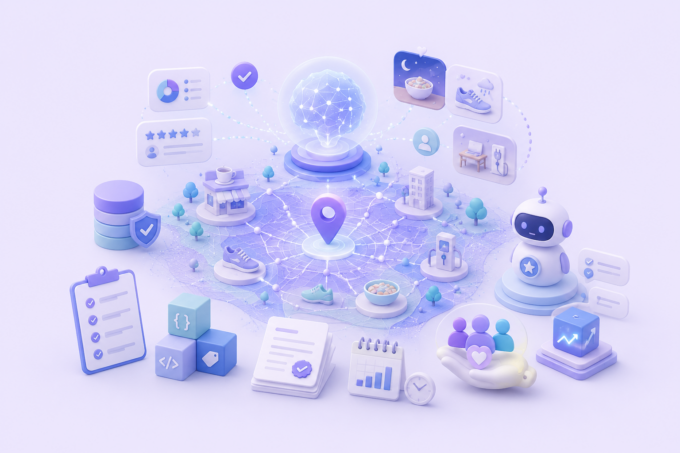
In generative AI-based search environments, user prompts are not long strings of keywords but expressions containing context, situation, and intent — aligning precisely with the nature of CEPs. Whether a person searches for a drink to stay awake when tired but still needing to work, or a beverage for all-night studying, AI focuses on the underlying meaning and interprets both as belonging to the same CEP cluster: situations requiring energy and concentration. CEP expansion must therefore occur not only in consumer memory but also simultaneously within the AI semantic space.
The key issue in GEO is that AI search processes information very differently from traditional search. In the past, effective keyword optimization could secure high search result rankings. Today, AI decomposes queries into multiple subtopics and reorganizes information to provide summarized answers. Whether a brand is mentioned or recommended depends on how consistently it is connected to the underlying CEP. In this era, being the top result for a keyword matters far less than being the brand most strongly recalled for very specific contexts.
GEO also plays a powerful role in understanding non-customers. CRM and DMP data reflect only the behaviors of people who already care about the brand. But full population search data — such as what ListeningMind provides — reveals the authentic language of the entire market, including non-customers. ListeningMind clusters consumer intent through behavior-based analysis of full volume search data, enabling remarkably accurate insight into what situations non-customers encounter, what they think, and what categories they consider. Tools such as Cluster Finder and Path Finder visualize the CEP world of non-customers, making it possible to understand the category structures in their minds and how AI interprets them. This creates the foundation for connecting CEP strategy with GEO strategy.
Brands that want to compete effectively in the GEO era must design content that AI wants to cite for each CEP. This requires content that incorporates natural language questions and answers reflecting real search behavior, and clearly shows how the brand connects to the situation. Entity-based SEO strengthens this further by making brand, product, situation, and benefit relationships machine readable.
Distinctive Brand Assets (DBAs) also play a crucial role. A brand’s visual and verbal assets not only influence human memory — they also provide structural cues that AI uses when classifying and summarizing content. When certain colors, patterns, copy tones, or scenes repeatedly appear in specific CEP contexts, AI strengthens the brand-CEP connection. Developing consistent CEP-specific assets and repeatedly exposing them is therefore a critical strategic priority in the GEO environment.
GEO also acts as a systematic feedback mechanism for evaluating CEP strategy. Brands can measure how often and in what context AI cites their brand for each CEP. If a CEP is dominated by competitors, that zone becomes a strategic priority. Through continuous monitoring and iteration, brands can gradually increase their semantic share within each CEP.
For this reason, the emergence of a new organizational function called Brand Ops may become necessary. Brand Ops is not merely a team executing campaigns — it is a system that continuously manages the brand’s semantic landscape and optimizes CEP connections based on real-time GEO feedback, much like how DevOps transformed product development into a continuous operation model.
The following are key examples that illustrate the CEP and GEO approach.
1. How consumer prompts are reconstructed as CEPs
In today’s generative search environment, consumer questions are expressed as follows:
- “Recommend an energy drink that is not too heavy when I am studying all night.”
- “What is a good energy drink to have before working out?”
- “Is there a drink that helps when I get sleepy during late-night work?”
At first glance, these questions may appear different from one another, but in the semantic space of AI, they all belong to a single CEP cluster: situations involving fatigue and concentration that require an energy drink. The various expressions consumers use gather around the same semantic coordinates from the AI’s perspective, and the likelihood of a brand appearing in a GEO response is determined by how frequently that brand appears within this cluster.
2. Why brands must penetrate CEP clusters
Imagine a brand that is strongly recognized for the CEP “a drink for tired moments,” but has no association with other CEPs such as “energy replenishment before workouts,” “focus support during exam periods,” or “staying awake while driving at night.” In such a case, the brand will miss a wide range of purchase moments across the market. Consumers do not choose based on brand loyalty but rather from the set of brands that come to mind at that specific moment. A brand that occupies only one or two CEPs faces structural limitations and will struggle to be chosen across different situations.
Growing brands build presence across multiple CEPs through the following actions:
- Repeated exposure to diverse scenes such as “late-night work,” “before exercise,” and “during exam periods” in advertising
- Consistently applying DBAs such as packaging, colors, and copy in alignment with each CEP
- Designing search content structures that mention both the brand and the relevant CEP together
When this happens, the connection of “this CEP → this brand” is strengthened both in consumer memory and in the AI semantic space, significantly expanding the pathways for attracting new customers.
3. The type of content AI prefers to cite
AI tends to trust and cite content that follows these patterns:
- Content that incorporates consumers’ natural language questionsTitle: “Why you need an energy drink that feels light during late-night work” / Body: “When studying all night or during exam season, what you need is not just high caffeine…”
- Structural explanations linking brand, situation, and effect”Energy X helps maintain concentration during long meetings or late-night work…”
- Information structures with clearly defined entity relationships (such as JSON-LD): Brand / Product / Use situation (CEP) / Intended effect (benefit)
Pages that combine these elements are more likely to be perceived by AI as representative sources for a given CEP cluster, increasing the likelihood that the brand will be cited in generative responses.
4. Why CEP-specific DBAs are powerful for both AI and humans
DBAs are assets such as colors, shapes, tones, styles, and slogans that allow immediate brand recognition. What matters is that the core DBAs remain unchanged even as CEPs differ. Scenes may vary, but the brand’s core assets must be repeated consistently.
For example, imagine an energy drink brand with the following consistent set of DBAs:
- Primary color: cobalt blue
- Shape asset: a vertical line pattern
- Verbal asset: a core copy tone such as “ignite your focus”
If the brand deploys these consistently across different CEPs, brand recognition remains intact even though the situations differ: - Late-night work CEP: dark office background + blue lighting accents + vertical line pattern + “ignite your focus”
- Pre-workout CEP: gym setting + blue highlight lighting + emphasized vertical line pattern + “ignite your focus before your workout”
- Exam period CEP: study desk scene + blue highlight elements + vertical line pattern + “ignite your focus before studying”
While the scenes change, the assets remain identical. This causes consumers to quickly connect any situation to the same brand, and causes AI to repeatedly learn the same patterns, strengthening the brand-to-CEP association. Varying only the situation while keeping DBAs consistent across CEP-specific content is the fundamental principle that imprints the brand strongly in the minds of both people and AI.
5. How GEO monitoring functions as a feedback mechanism for CEP strategy
Brands can evaluate search performance by asking questions such as:
- “Which brands does AI cite in energy drink prompts related to late-night work?”
- “Do competitors appear more frequently in prompts related to pre-workout beverage recommendations?”
- “How often is our brand mentioned in energy drink prompts during exam periods?”
Based on such monitoring results, brands must supplement the missing content, assets, and exposure for each CEP, and then continue monitoring AI search results, gradually increasing their share within that CEP. This is a practical method for managing the total amount of contextual territory that the brand occupies in the world of non-customers.
CEP and GEO as an Integrated Strategic System
CEP strategy and GEO strategy are not separate or parallel concepts — they must function together as a single integrated strategic system essential for sustained brand growth. Together, they form a methodology through which a brand secures presence simultaneously within human memory structures and within AI semantic space. The core of future brand competition will shift toward securing share within this dual space.
Ultimately, brand growth will be determined by how widely and how persistently the brand is remembered and invoked during the CEP moments of non-customers across both the human world and the AI world. GEO becomes a new weapon for executing, monitoring, and refining this strategy, and CEPs can be understood as the strategic strongholds that support its foundation.
Ready to identify the CEPs that matter most for your brand — and make sure AI cites you in those moments?
ListeningMind gives you full-population search data to map the real CEP landscape of non-customers, and connect your brand to the moments that drive growth.