
Index
Use Case Overview
This use case explores how Patagonia category entry points appear across U.S. search behavior, and how outdoor apparel teams can use ListeningMind to identify distinct contexts behind those searches.
This use case explores how Patagonia category entry points appear across U.S. search behavior, and how outdoor apparel teams can use ListeningMind to identify distinct contexts behind those searches.
In many categories, searches related to sustainability, brand comparison, and local retail discovery are treated as a single audience. This makes it difficult to design accurate messaging, positioning, and GEO responses.
This article presents a method-based use case showing how Category Entry Points can be identified and applied using ListeningMind, based on publicly observable search behavior.
The Business Question
Teams typically face three practical questions when analyzing brand-related search demand:
- How many distinct entry points lead consumers to search for a brand?
- What motivations and expectations differ across those entry points?
- How should content, positioning, and GEO prompts change depending on the entry point?
How ListeningMind Can Be Applied
Using ListeningMind’s Cluster Finder, teams can analyze large sets of brand-related search terms and group them by shared search intent. This allows demand to be visualized as clusters rather than treated as a linear funnel.
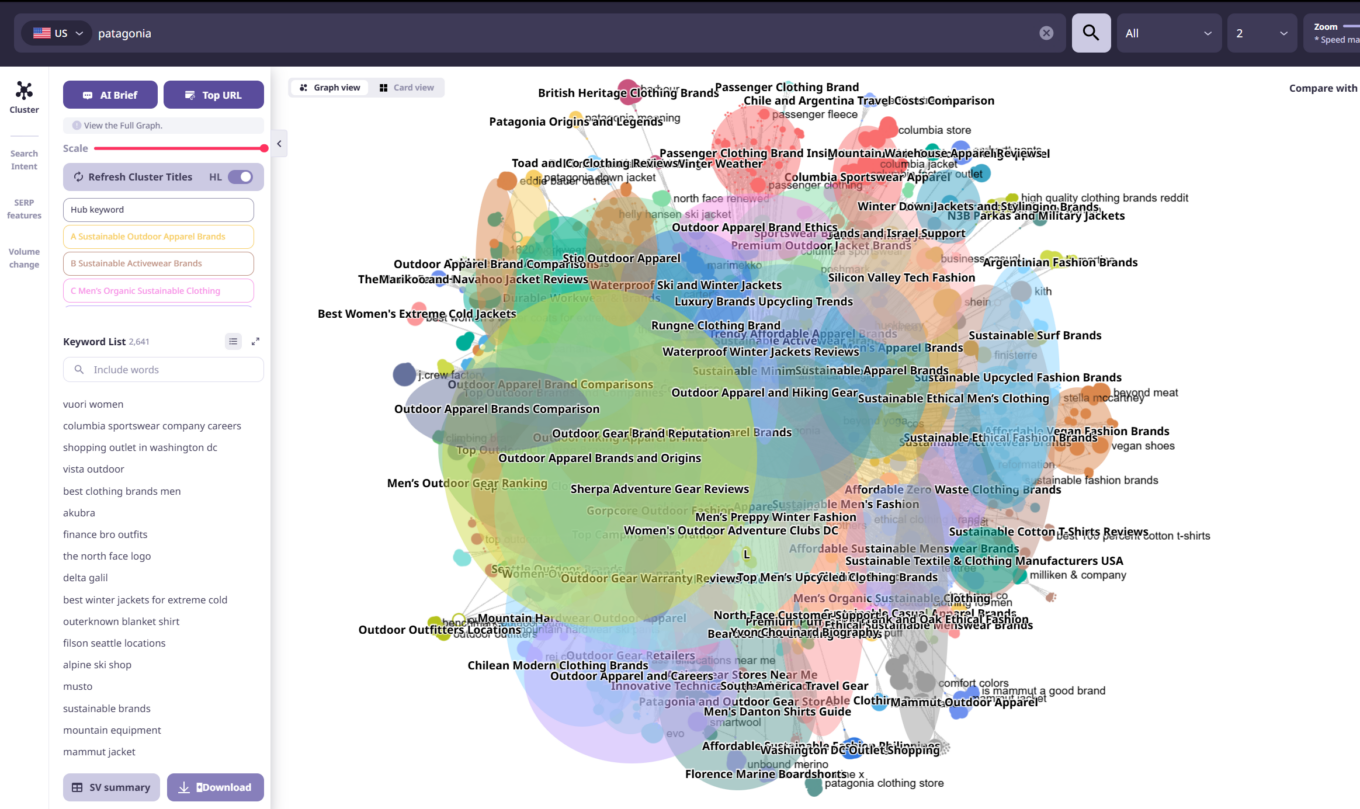
In this example, over 2,600 U.S. search terms related to Patagonia were analyzed to illustrate how Cluster Finder surfaces an ecosystem of distinct entry points.
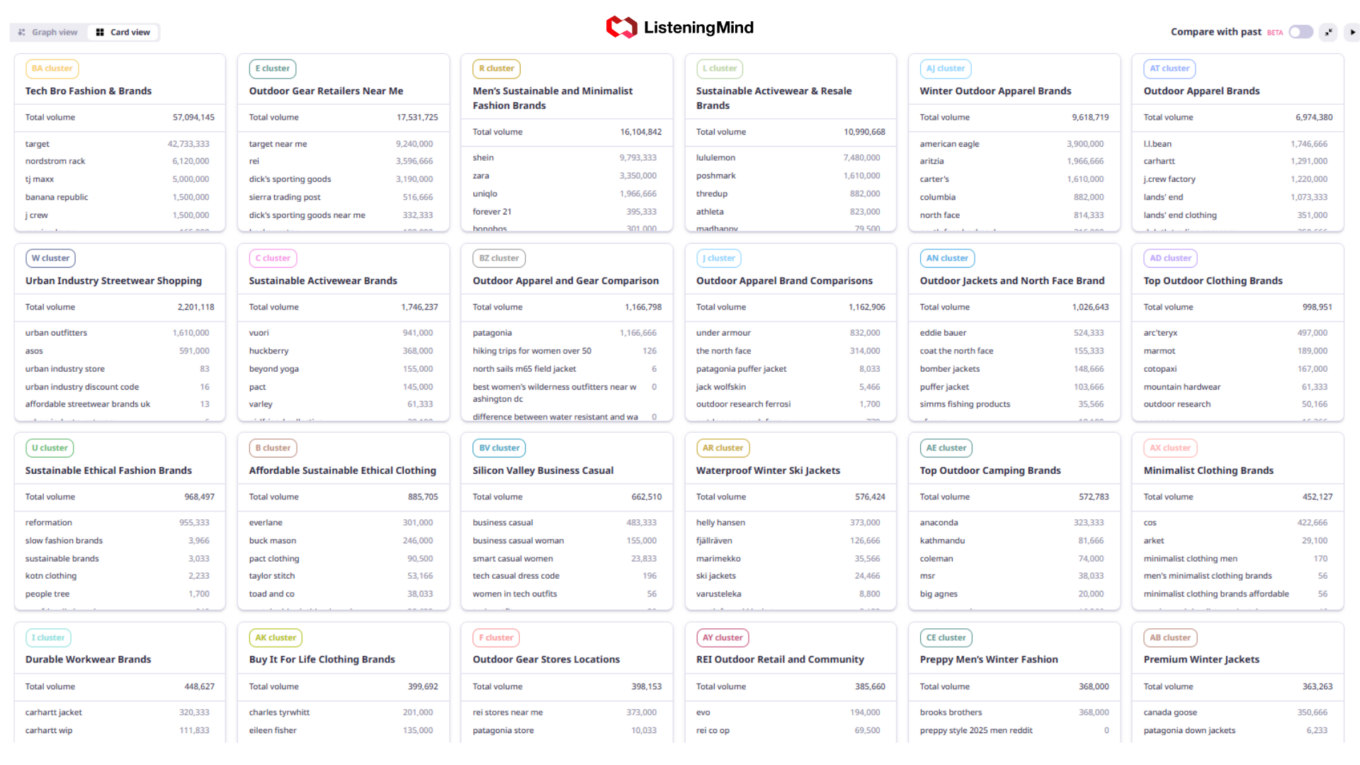
For deeper review, teams can switch to Card View to evaluate each Category Entry Point independently.
What This Approach Produces
Applying this approach reveals that Patagonia-related demand is structured around multiple, non-interchangeable Category Entry Points. In this example, three clusters stood out by keyword count and strategic relevance.
Category Entry Point: Affordable Sustainable Menswear

This cluster represents consumers entering the category through ethical and value-based considerations. Teams can use this CEP to understand sustainability as an entry point—not as a feature comparison.
- Identify sustainability-led personas
- Separate material-focused searches from performance-focused ones
- Design GEO prompts aligned with ethical evaluation
Category Entry Point: Outdoor Performance Brand Comparison
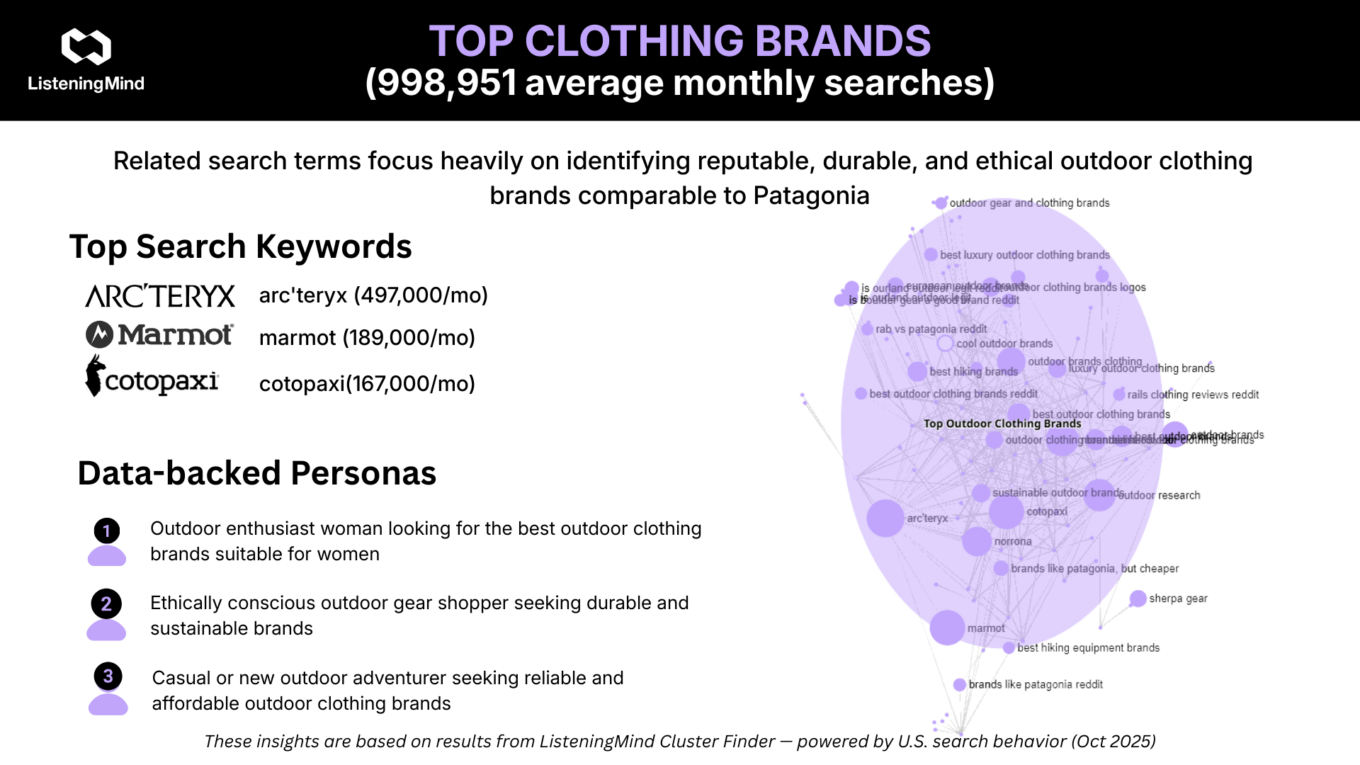
This cluster reflects consumers evaluating brands based on durability, reputation, and long-term performance. Messaging and GEO responses here should differ from sustainability-led contexts.
- Map comparison-driven intent separately
- Align messaging with reliability and longevity
- Avoid mixing ethical narratives into performance contexts
Category Entry Point: Local Outdoor Gear Discovery
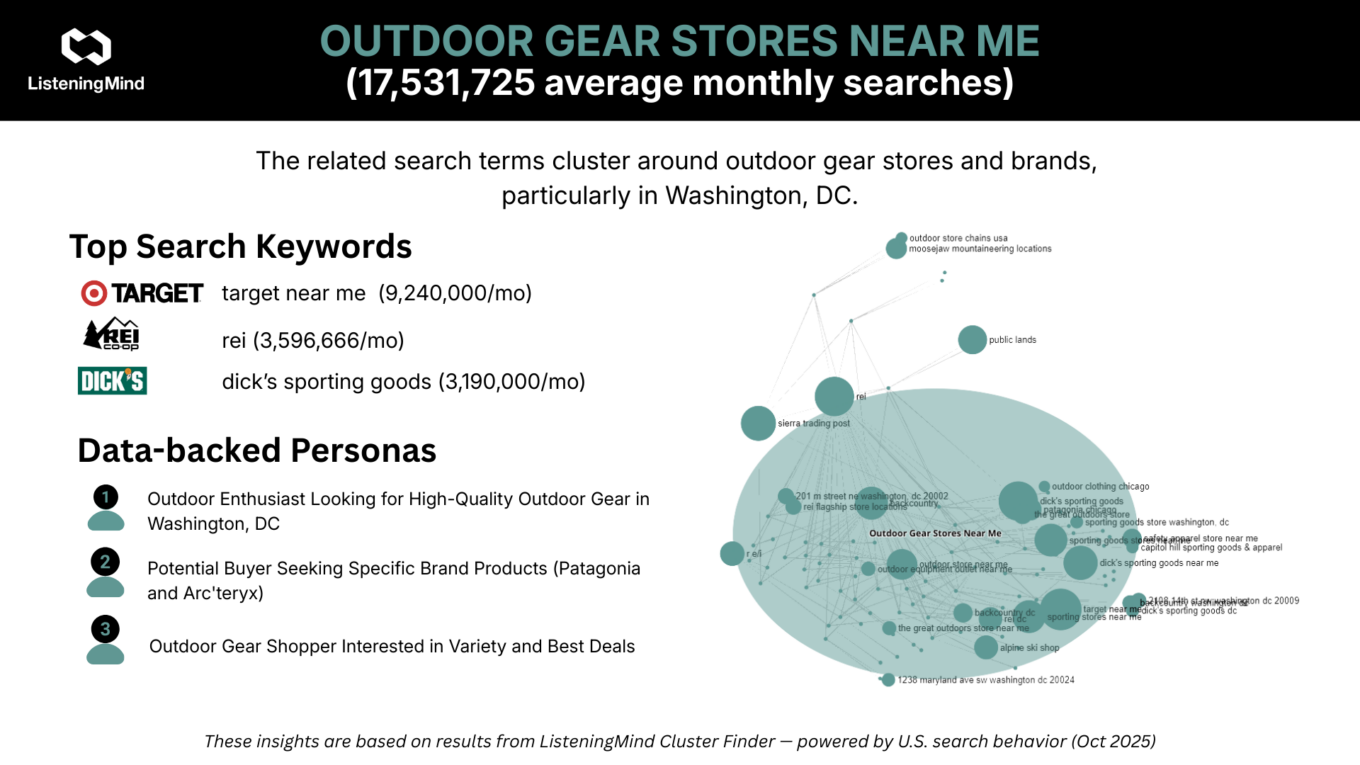
This cluster captures location-driven searches where the brand appears as part of a local retail and service context.
- Identify location as a primary entry point
- Surface service and in-store expectations
- Design GEO prompts focused on convenience and trust
How You Can Apply This Approach
To apply this use case to your own brand or category:
- Start with a core brand or category keyword
- Use Cluster Finder to group searches by shared intent
- Identify distinct Category Entry Points rather than a single funnel
- Design content, positioning, and GEO responses for each entry point independently
Why This Matters
This use case demonstrates that brand-related demand cannot be addressed with a single message. By separating Category Entry Points, teams can align strategy with the actual context in which demand appears.
Get context intelligence for your own use case with a 1-week ListeningMind trial .