
Index
In October 2025, the phrase “yeoman coat” began appearing in U.S. search data, showing a sharp rise in interest for a term that previously had almost no visibility. Without context, it looked like a new fashion trend. Read on to learn what caused this dramatic spike.
A Sudden Appearance in Outerwear Trends
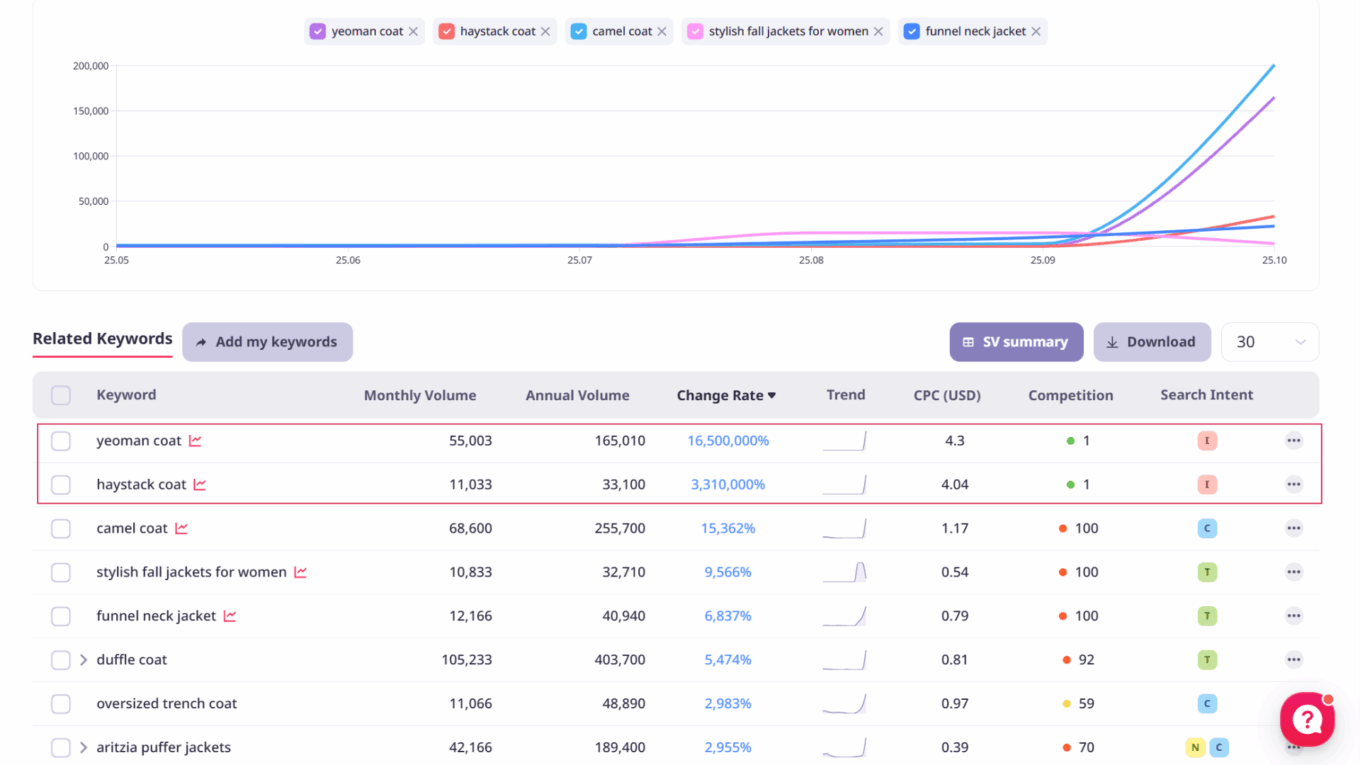
Keyword volume comparison, October 2025. Source: ListeningMind Intent Finder
ListeningMind’s Intent Finder showed that “yeoman coat” reached an estimated 165,000 U.S. searches in early October 2025, with a monthly average around 55,000 afterward. Both terms showed high informational intent—people were searching to understand the words, not necessarily to buy products.
Cluster Finder gave the needed insight. After Wikipedia and Merriam-Webster, the third top URL was a Reddit post discussing a New York Times Connections Puzzle from October 6, 2025, the timing of which the spike aligns precisely the spike.
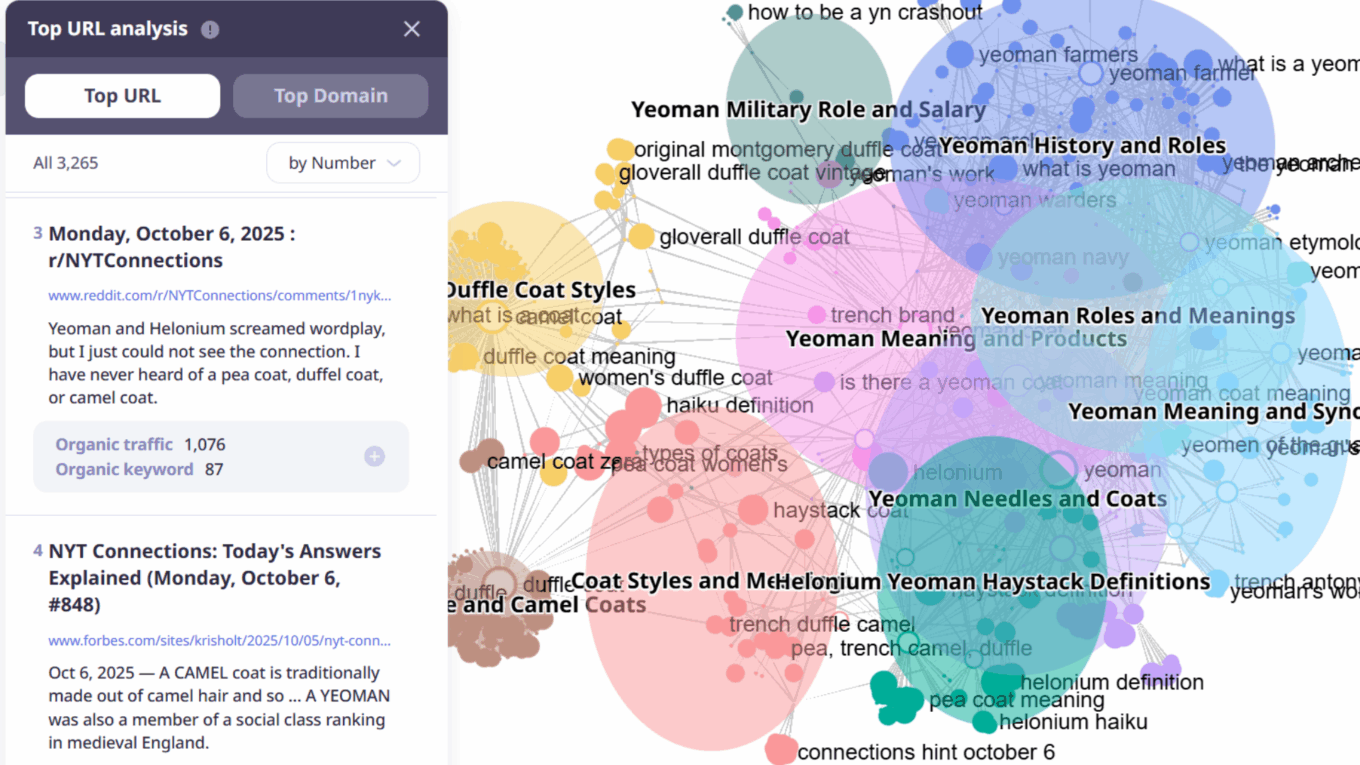
The NYT Puzzle Connection
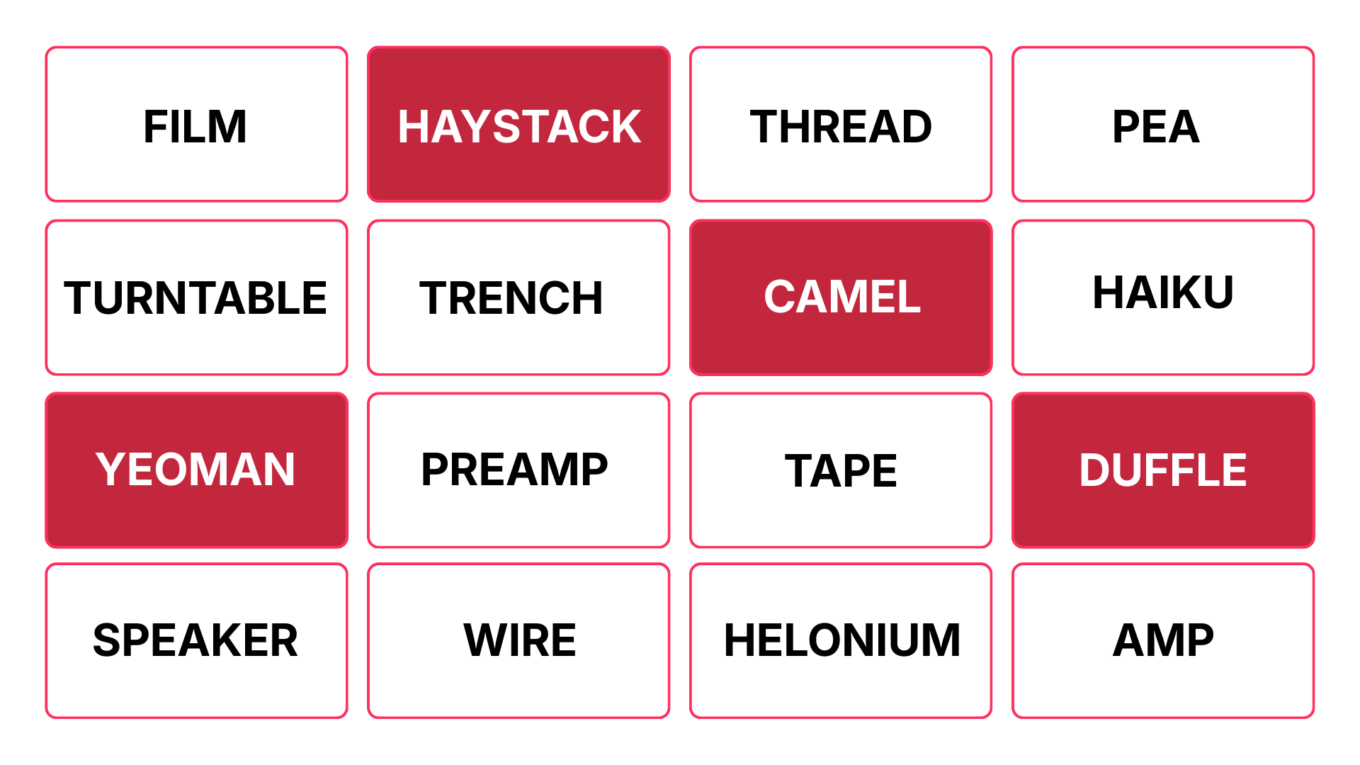
Connections is a word game that challenges players to find themes between words. That day’s puzzle included purple category titled “Starting with Homophones of Greetings” and a green category titled “Kinds of Coats.” It also included these words:
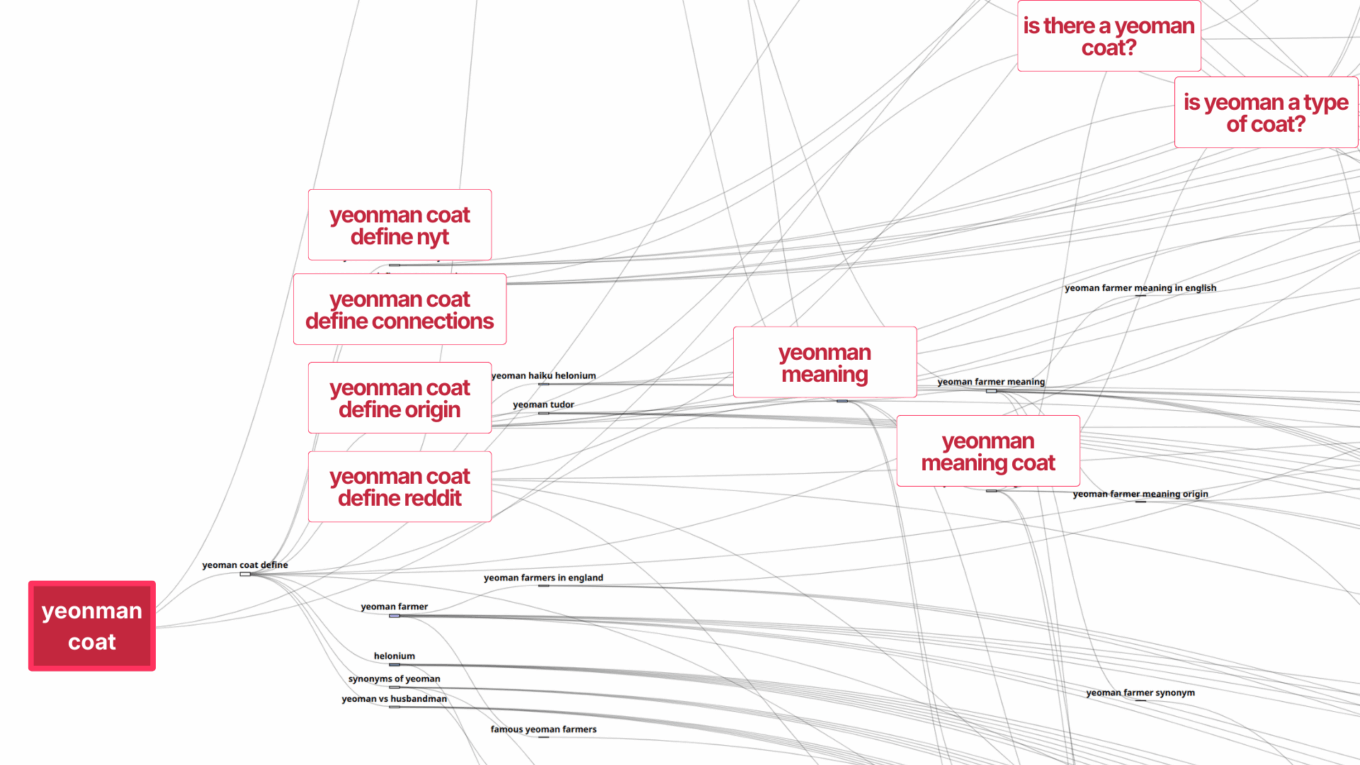
For a word like yeoman, which is quite tricky, solvers likely searched “yeoman coat” directly to see if it is a real thing. ListeningMind path data confirms this pattern with search sequences such as “yeoman coat → yeoman coat define nyt→ is there a yeoman coat?.” These behaviors are typical of crossword solver lookups rather than shopping activity.
The Historical Context: What is a Yeoman?
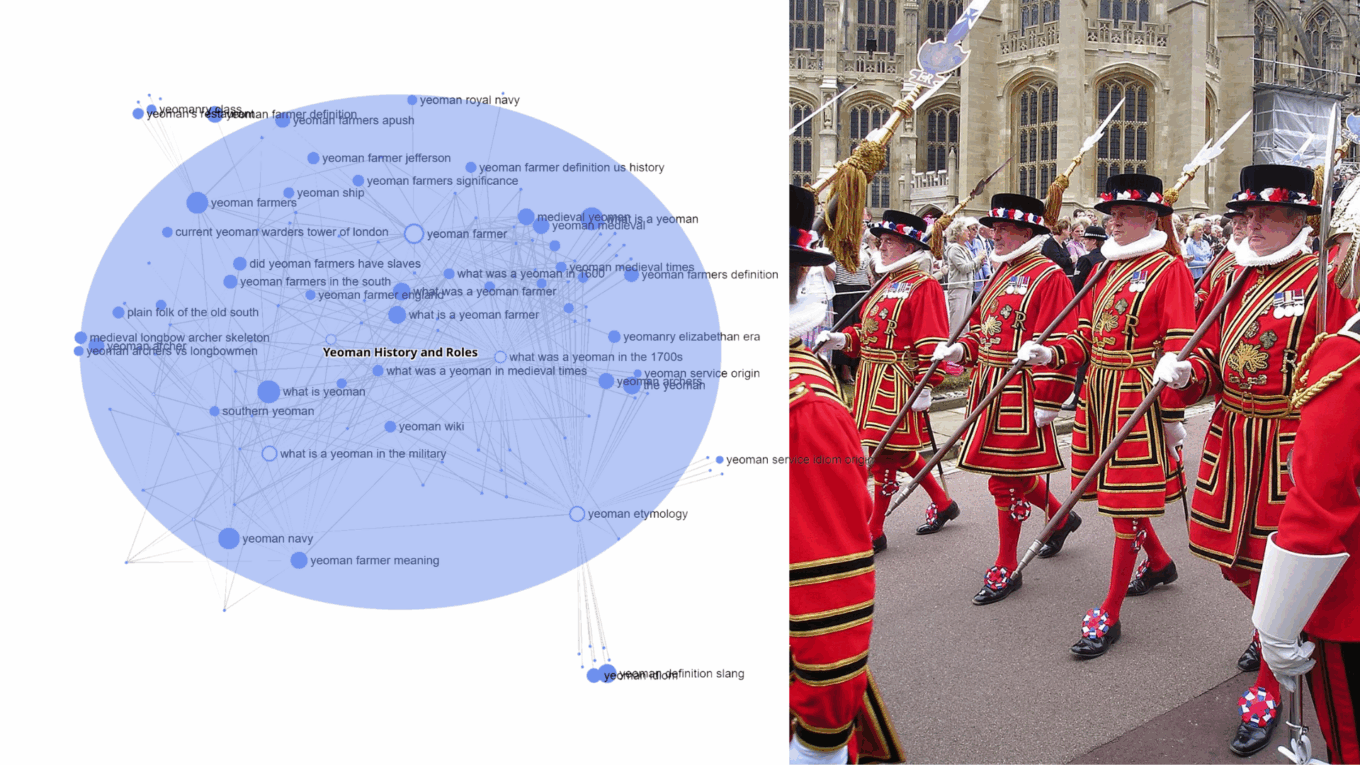
Search data around the word “yeoman coat” reveals a dense network of related queries about history, military service, and class identity. This cluster, centered on “Yeoman History and Roles”, shows how people continue to connect the word with Britain’s social and military past.
At its core, a yeoman referred to an independent farmer or landholder in medieval and early modern England. Yeomen occupied a social position between the gentry and the laboring classes. They were freeholders who worked their own land, served in local militias, and later formed part of Britain’s Yeomanry Cavalry, a volunteer mounted force established in the late 18th century.
Key historical associations found in the search data include:
- Historical roles: People often searched phrases like “yeoman in medieval times,” “yeoman in the 1700s,” and “yeoman elizabethan era.” These show interest in how the role of yeomen changed over time — from rural workers to members of organized military units.
- Farmers and class identity: Terms such as “yeoman farmer definition,” “southern yeoman,” and “plain folk of the old south” suggest that users were exploring how the word “yeoman” came to represent independent landowners, both in Britain and later in the United States.
- Military and service titles: Searches like “yeoman in the military,” “yeoman navy,” and “yeoman warders tower of London” point to the word’s later use for official service roles — from royal guards to naval clerks.
Online Discussion and Spread
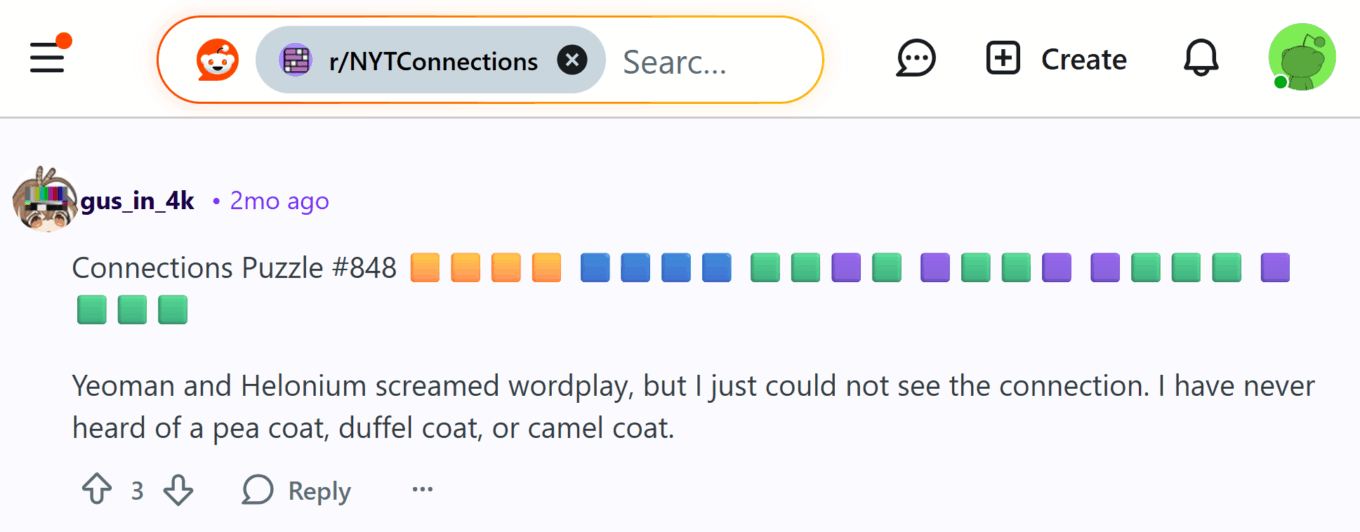
After the puzzle appeared, crossword solvers discussed words from the puzzle like “yeoman” and “helonium” on Reddit’s r/NYTConnections and r/crossword communities. These threads gained traction and contributed to the sudden jump in searches between October 6–8, 2025.
By mid-October, mentions of “yeoman coat” surfaced in content aggregators and AI-curated shopping feeds. The phrase began circulating outside the puzzle community, giving the appearance of a fashion trend, even though no product launch or brand promotion had taken place.
From Curiosity to Commercial Listings
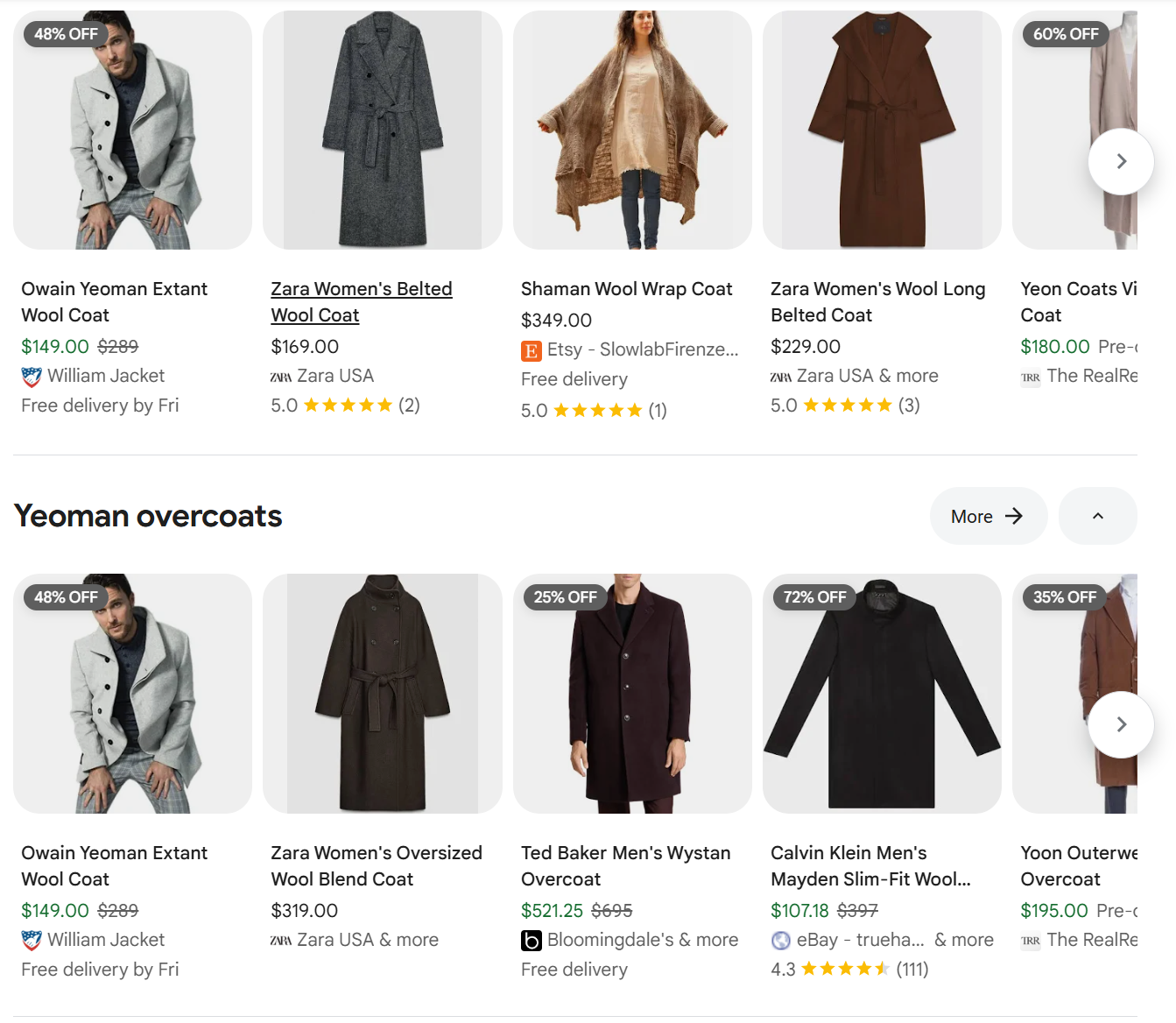
By November 2025, “yeoman coat” began appearing in Google Shopping and retail search results. The listings include:
- Wool balmacaan and trench coats
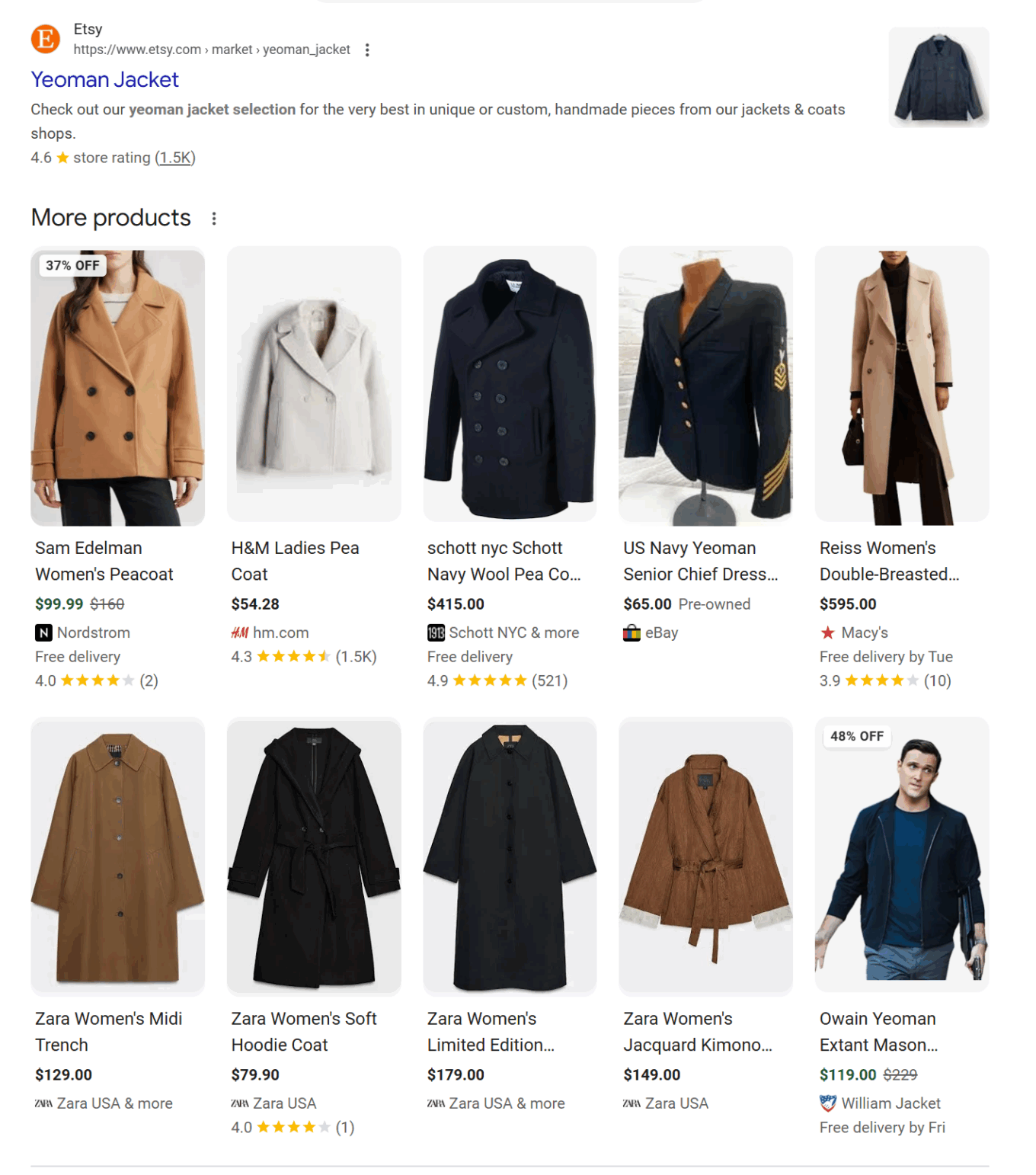
- Peacoats and military-style jackets
- Vintage U.S. Navy Yeoman uniforms
Most of these are just other, existing products surfaced under the trending term, a standard response in search algorithms and retail SEO systems that align inventory with high-volume queries. You can see the same thing in the Etsy search result that also appears on Google main page.
A Data Pattern, Not a Fashion Movement
There is currently no indication that “yeoman coat” represents an emerging fashion category. Instead, it illustrates how language events, like puzzles or viral phrases, can temporarily influence digital trends and even retail search algorithms.
| Phase | Description |
|---|---|
| 1. Trigger | NYT puzzle introduces new word combinations (Oct 6, 2025). |
| 2. Curiosity | Users search for definitions and related terms (Oct 6–8). |
| 3. Algorithmic Spread | Associations between “yeoman” and “coat” become stronger. |
| 4. Retail Adaptation | Shopping platforms tag related outerwear with the trending keyword. |
Summary
- The rise of “yeoman coat” originated from the October 6, 2025 NYT “Connections” puzzle, not a fashion launch.
- While historical Yeoman coats exist, they mainly refer to military or ceremonial uniforms.
- The search increase was driven by curiosity and algorithmic association, not consumer demand.
- Retail systems later indexed the phrase, linking it to existing outerwear categories.
Overall, the appearance of the “Yeoman Coat” trend demonstrates how quickly a linguistic or cultural event can move through digital ecosystems, temporarily shaping search behavior and product visibility even without an underlying fashion movement. Context matters!