Every purchase has a path.
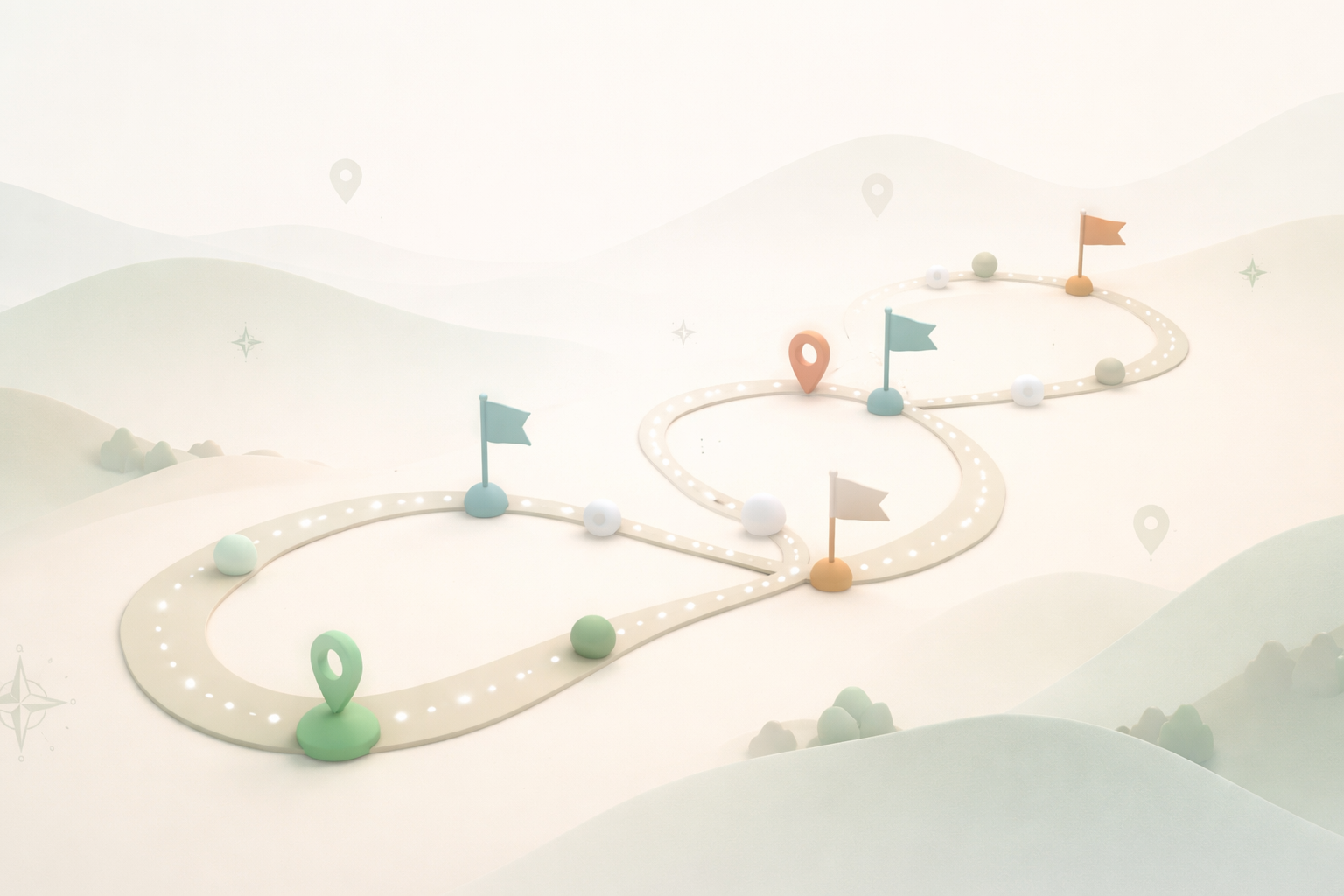
Customer journey mapping is how I make sense of that path, not as a funnel, but as a map people actually move through. I’ve never seen someone wake up and buy something without thinking. It always starts with a question. That question turns into curiosity, then comparison, then hesitation, and eventually a decision. That movement, from uncertainty to commitment, is what I mean when I talk about the customer journey.
A lot of brands talk about the journey. Very few actually see it.
For a long time, I watched teams rely on assumptions or clean, linear funnels that looked great in slides but didn’t match reality. Real customer journeys don’t move neatly from awareness to consideration to conversion. They branch. They pause. They loop back. They change based on context, emotion, and timing.
To me, a real customer journey isn’t a funnel.
It’s a map.
Customer Journey Mapping: From Assumptions to Signals
When I want to understand a journey properly, I start with data that reflects how people actually move, not how we wish they would. That’s why I keep coming back to search behavior.
Every search query is a breadcrumb. It captures a private moment of intent: a question someone isn’t ready to ask out loud, a comparison they’re quietly making, a doubt they haven’t resolved yet. When I connect enough of these moments, patterns start to show up.
I can see where people enter a category, what slows them down, what pushes them forward.
At that point, the journey stops being theoretical. I can actually see it.
Seeing Patterns, Not Points
Reading a customer journey like a map means I stop obsessing over individual touchpoints and start paying attention to movement.
Early on, I usually see clusters of exploratory questions. In the middle, waves of comparison and evaluation. Near the end, signals of urgency and reassurance-seeking. The flow tells me not just where a brand appears, but where it’s missing, and where other options are shaping the decision instead.
That’s the difference between tracking interactions and understanding behavior.
Designing for Context, Not Products
Once I can see the full journey, my approach changes.
I stop creating content based on how products are organized internally. I stop guessing what people “should” want at each stage. Instead, I design around context.
I ask what someone is trying to figure out right now. I match the message, tone, and timing to their mindset, not my sales funnel. Marketing becomes less about pushing people forward and more about removing friction when they’re ready to move.
What This Changed for Me as a Marketer
The best results I’ve seen haven’t come from forcing customers down a path.
They’ve come from learning to read the map and guide people through it naturally. When I understand the journey as it actually exists, I stop chasing conversion metrics and focus on clarity and trust.
Almost every time, the conversion follows.
Because once you understand the journey, you’re no longer guessing.
You’re meeting people where they already are.
🚀 Start seeing customer journeys as they really are. Explore ListeningMind with a free 7-day trial.