Index
The Age of AI Agents: Why Brand Positioning Must Evolve and How AI Agent Branding Is Redefining Consumer Decision-Making.
Understanding AI agent branding through intent-first brand design.
In Part 1, we examined how AI agents have become the new media, reshaping how brands are discovered and remembered. Now we turn from why that matters to how brands can grow within it.
As AI begins guiding real consumer choices, success depends not on fame but on fit- how precisely a brand aligns with context and intent. This article introduces a practical framework for intent-first brand design: how to capture consumer moments, structure data for AI understanding, and build the evidence that earns your brand a lasting place on the map through AI agent branding.
From Search to Agents
AI is rapidly reshaping how we live and work, and marketing is once again at the center of that change. Just as search engines redefined the customer journey over the past 25 years, AI agents are now taking over that role.
But agents are not just smarter chatbots. They are decision partners, always present when consumers choose what to buy or how to plan a campaign. For consumers, they remove the need to scroll through endless reviews. For marketers, they act as analytical teammates capable of turning data into real-time strategy.
This new reality forces every brand to face a sharper question:
“When an AI agent guides the consumer’s choice, why and in what context should it choose your brand?”
That question doesn’t just change marketing tactics- it redefines AI agent branding itself.
Brands as Coordinates
For decades, branding aimed to make the name known. Marketers repeated logos, taglines, and visuals until they became familiar. But in the era of AI agent branding, recognition alone no longer guarantees visibility.
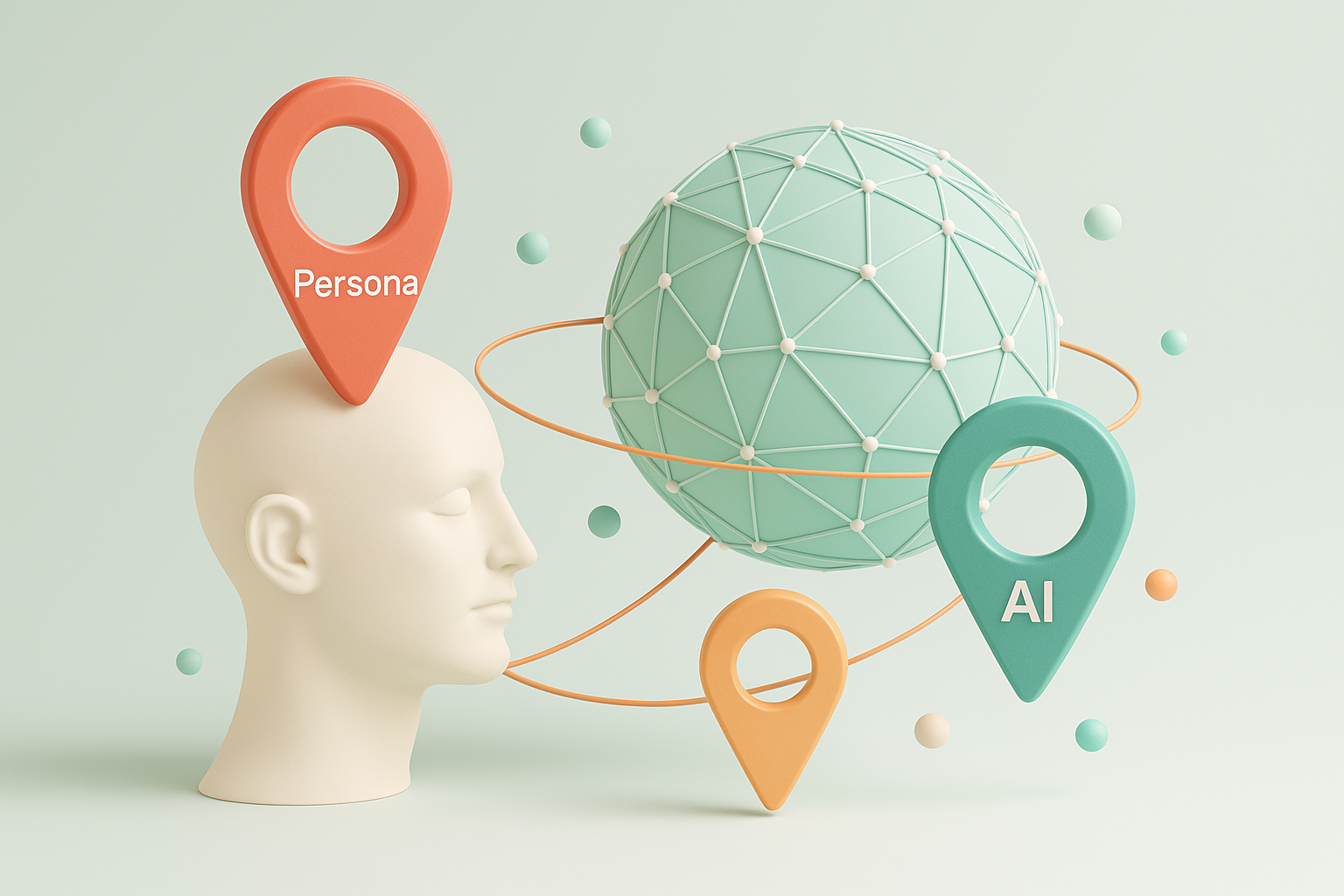
When a consumer asks for “a light meal after a late shift,” awareness isn’t enough. Unless your brand fits that specific context, it stays invisible. In this new environment, a brand is not just a name—it’s a coordinate in a shared meaning map between humans and AI.
Each brand occupies a coordinate in this semantic space, defined by its evidence—product data, use cases, and cultural context. AI agent branding ensures those coordinates are clear and credible, making your brand the first one called when intent arises.
Intent as Context, Not Desire
At ListeningMind, we say that every strategy begins with intent. In AI agent branding, intent isn’t a fleeting desire—it’s a blend of time, place, emotion, and memory. When someone searches for “a protein snack I can eat on the subway,” that query describes a scene, not just a product.
Growth happens in those high-resolution moments. To make sure an AI agent recalls your brand in those scenes, you must describe them precisely, structure data around them, and prove your product fits.
This process—expressing, encoding, and evidencing relevance—is the foundation of intent-first brand design. It’s how a brand earns its coordinate on the AI’s meaning map and maintains visibility in natural language queries.
Designing for Intent-First Branding
What determines whether an AI agent will call your brand by name? It depends on how well your brand is built around real consumer contexts. AI agent branding makes this possible through three key steps:
- Collect scenes, not just keywords. Use search data, reviews, and social conversations to capture real-life moments people describe.
- Provide proof of fit. Back each scene with structured data like product details, reviews, and pricing consistency across channels.
- Measure “call rate,” not reach. The key metric in AI agent branding is how often your brand is called by an AI within relevant contexts.
Making Data Actionable for AI
For AI agent branding to succeed, your brand data must be structured and reliable enough for AI interpretation. When AI decides which brand to recommend, it prioritizes verified data—product specs, delivery times, and transparent policies.
- Build a unified data schema. Keep product information structured and consistent.
- Speak with one voice. Ensure all touchpoints—chatbots, pages, and support—use consistent language.
- Show your sources. Transparency increases the AI’s confidence in your brand.
- Create feedback loops. Track unanswered queries and fill those data gaps over time.
This structure allows AI systems to conclude:
“It’s safe to call this brand from this coordinate.”
That trust—earned through structured data—is the foundation of AI agent branding.
Intent Data as the Engine of Growth
Even in the AI era, one truth remains: brand growth begins with intent. With AI agent branding, brands now use behavioral signals from search, reviews, and social data to identify hidden needs and opportunities.
Tools like ListeningMind’s Cluster Finder and Path Finder visualize how intents cluster and evolve. These insights reveal emerging needs and help brands position themselves where AI agents—and consumers—look first.
In short, intent data isn’t just research—it’s the fuel that powers AI agent branding and long-term growth.
The Future of Brand Survival
In the age of AI agent branding, survival depends on the clarity and coverage of your coordinates. Each Category Entry Point (the “when,” “why,” and “how” behind a purchase) represents one coordinate. The more clearly your brand owns these moments—with structured, evidence-based content—the stronger its visibility in the agent ecosystem.
The essence of branding hasn’t changed: it’s still about relevance in the consumer’s mind. What has changed is the method. It’s not about repeating your name—it’s about anchoring it within the coordinates of intent and reinforcing those anchors with proof.
Future branding will be defined by clarity, structure, and credibility. The strongest brands will manage living ecosystems of coordinates—continuously mapping, refining, and expanding their relevance within AI systems. The future of AI agent branding belongs to brands that can be clearly understood and confidently called by AI.